Sennheiser Spectera wideband wireless systems have been permanently installed at Theater in der Josefstadt in Vienna, making it the first theatre in Austria to deploy the technology as part of its fixed audio infrastructure.
The historic venue, which welcomes more than 200,000 visitors and stages around 550 performances each season, upgraded its audio systems during a six-week summer break in 2025. The project formed part of a wider move to a fully digital audio workflow.
The installation includes two Spectera base stations, 26 bidirectional SEK bodypacks and eight DAD antennas, with the system deployed in the theatre’s main auditorium. The venue, located in Vienna’s eighth district, has three balconies and seats almost 580 people.
The upgrade was led by Raimund Hornich, head of the sound department and multimedia at Theater in der Josefstadt, alongside deputy head Thomas Haas. The wider audio renewal also included a new digital mixing console, loudspeakers and a newly added centre cluster.
Hornich said the theatre evaluated alternative wireless options before selecting Sennheiser, citing Spectera’s feature set and value. The venue had already used Sennheiser systems, including Digital 6000 equipment and older EM 1046 receivers for specific applications.
A key factor in the decision was the bidirectional capability of Spectera’s SEK bodypacks, which can operate as both transmitter and receiver. Hornich said this was particularly useful for productions that move beyond the main stage into adjacent areas such as the Sträußelsäle ballrooms.
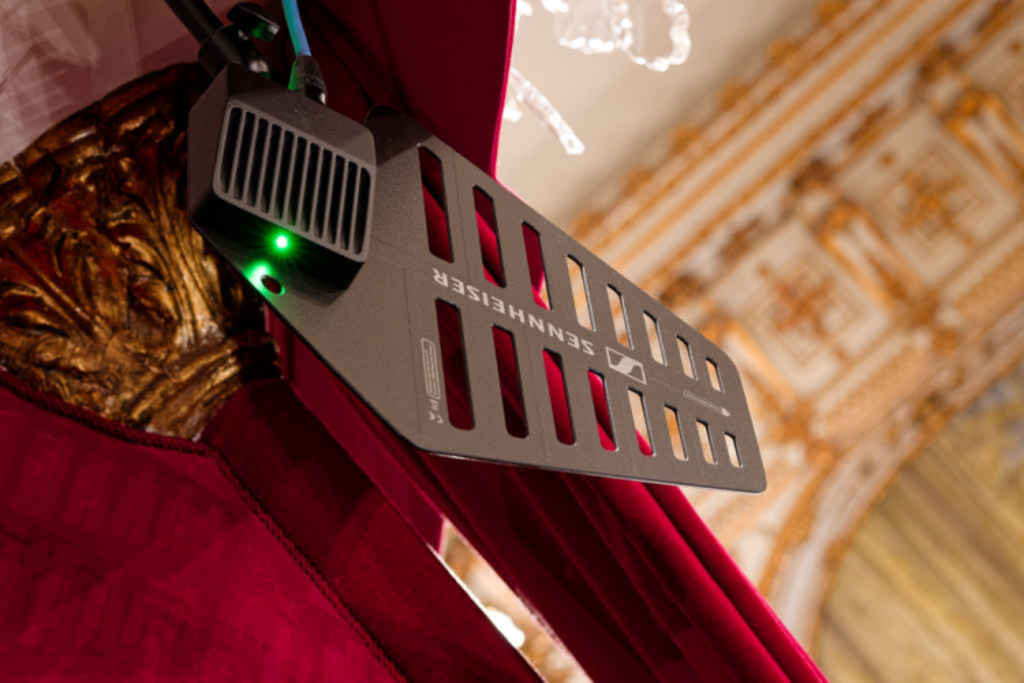
The eight Spectera DAD antennas are powered via PoE and installed in multiple positions around the venue to support coverage across performance areas, backstage and dressing rooms. The base stations are connected directly into the theatre’s Dante network via primary and secondary connections.
The theatre currently uses up to 24 SEK bodypacks with the two base stations, with two additional units kept as spares. The bodypacks are also used to feed audio signals to small active loudspeakers hidden within scenery, creating concealed sound sources during productions.
Hornich said the wideband system has been reliable since installation, adding that there have been “no unpleasant surprises” after hundreds of performances.
The project was integrated by TSAMM, with support from Sennheiser’s professional audio and technical application engineering teams.