Adding functionality is not always the smartest choice, as the functions must be right for each application otherwise it doesn’t add value.
In professional audio, there is a persistent assumption that more features automatically create more value. More processing, more control layers, more software, and more customisation options are often seen as indicators of a more capable solution. Yet many installed audio projects reveal a different reality. In practice, the challenge is not always adding functionality but selecting the right functionality for the application.
As system architecture becomes increasingly mature, many projects already include dedicated DSPs, mixers, AV processors, and control platforms upstream. In these environments, the role of the amplifier is often straightforward: deliver reliable, high-quality amplification. Adding another layer of processing can sometimes introduce unnecessary complexity rather than additional value. This has created space for a different perspective on system design, one where simplicity is not a compromise, but a deliberate engineering choice.
Our industry has traditionally been attracted to feature-rich products. Innovation is frequently measured by how much functionality can be integrated into a single product. However, there is growing recognition that system requirements vary significantly across applications. Not every installation requires advanced amplifier-side DSP, extensive routing capabilities, or software-driven management. The smartest solution is often the one that aligns most closely with the project’s actual needs.
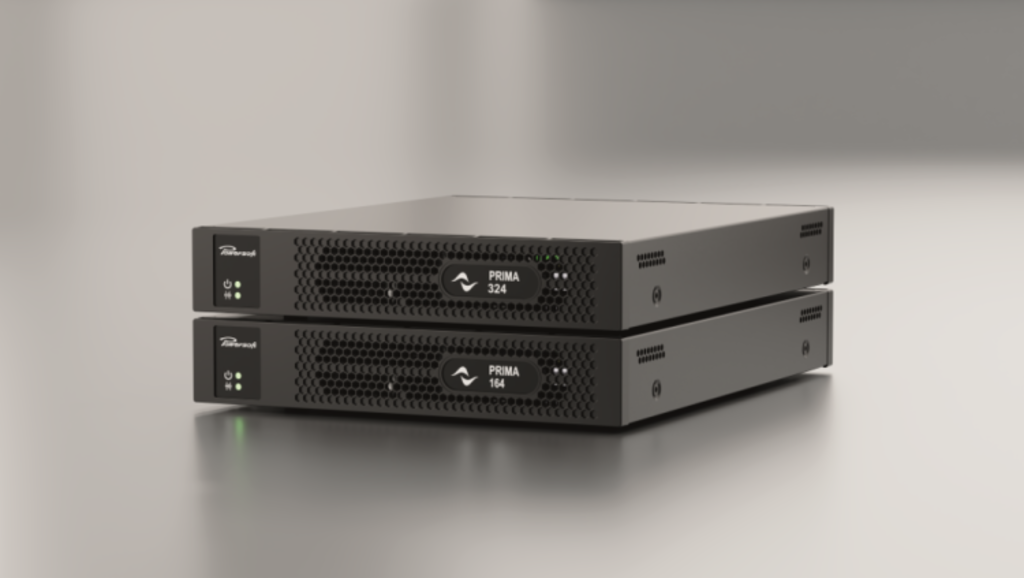
This is the thinking behind a new generation of purpose-built products such as Powersoft’s PRIMA Series. Rather than attempting to be all things to all applications, the platform embraces a concept the company describes as ‘Smart by Choice’. The idea is simple: professional performance is not determined by the number of features present, but by selecting the appropriate architecture for the task at hand.
Available in two four-channel models, PRIMA 164 and PRIMA 324, the amplifiers focus on providing reliable low-to-mid-power amplification while maintaining Powersoft’s established standards for sound quality and reliability.
This approach reflects a broader shift within the installed audio market. While high-power amplification platforms continue to play an important role, demand is growing for more compact solutions that address smaller commercial spaces and distributed installations.
Retail environments, hospitality venues, classrooms, meeting rooms, and conference spaces frequently require dependable amplification rather than large-scale power reserves. In many of these systems, the amplifier operates far below its maximum output, making oversized solutions both impractical and inefficient.
The challenge therefore becomes one of fit rather than capability. An amplifier that precisely matches application requirements can often deliver a better outcome than one loaded with unused functionality. This philosophy extends beyond power ratings and influences installation, commissioning, and long-term operation.
One consequence is reduced operational complexity. Installers can focus on system performance rather than navigating multiple software environments. Integrators benefit from cleaner architectures with fewer overlapping functions and fewer opportunities for configuration conflicts.
Simplicity also creates practical advantages during installation. Compact form factors allow products such as PRIMA to be deployed in locations where rack space is limited, behind displays, beneath conference tables, or in discreet equipment locations. Optional mounting accessories support traditional rack installations while preserving flexibility for space-constrained projects. Moreover, simplicity does not mean sacrificing professional features where they matter.
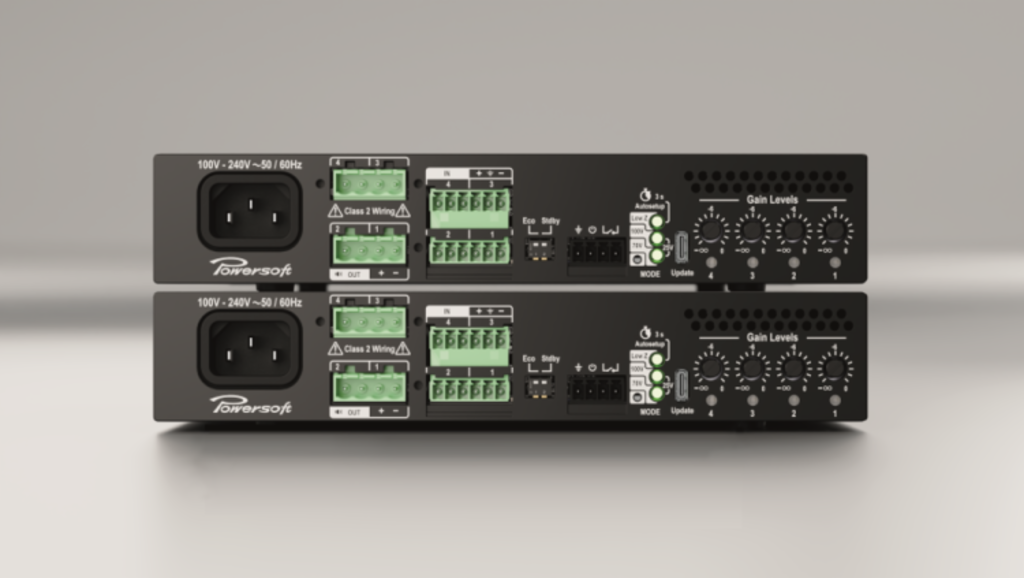
Auto Setup functionality, status indicators, power-sharing capabilities, and support for both Hi-Z and Lo-Z configurations help streamline commissioning while maintaining installation flexibility. These are the features that address real-world deployment challenges without introducing unnecessary layers of complexity.
Energy efficiency is another area where focused design can produce meaningful results. Across the industry, attention has shifted toward reducing operational costs and minimising environmental impact. Features such as Eco Mode and Auto Standby support more efficient day-to-day operation, helping systems consume only the resources they need. In commercial installations that operate continuously across multiple zones, these efficiencies can have a measurable impact over time.
What makes this trend particularly interesting is that it challenges a longstanding assumption within professional audio: that more technology always represents progress. In reality, technology becomes most valuable when it serves the broader system architecture rather than competing with it.
This is especially relevant as installed audio projects continue to diversify. The market is increasingly segmented, ranging from large, networked venues requiring extensive control and processing capabilities to compact commercial environments where reliability, ease of deployment, and cost efficiency are the primary concerns. A single product philosophy cannot effectively address every scenario.
As a result, amplifier portfolios are evolving to accommodate a wider range of project requirements. Advanced DSP-integrated platforms remain essential for applications demanding sophisticated management and processing.
At the same time, simpler amplification solutions fill an equally important role where those capabilities would be redundant. Rather than replacing one another, these approaches complement each other within a broader ecosystem.
Ultimately, the discussion is no longer about choosing between complexity and simplicity. It is about choosing the appropriate level of complexity for the application. The most effective systems are not necessarily those with the largest feature sets. They are the systems where every component contributes meaningful value to the overall design. In that context, simplicity becomes less about doing less and more about doing exactly what the project requires. That may be one of the smartest design decisions the industry can make.
www.powersoft.com