Pixel Sharp has used four Panasonic RQ35K 4K laser projectors to project imagery inspired by the Bayeux Tapestry onto the White Cliffs of Dover for a British Museum activation.
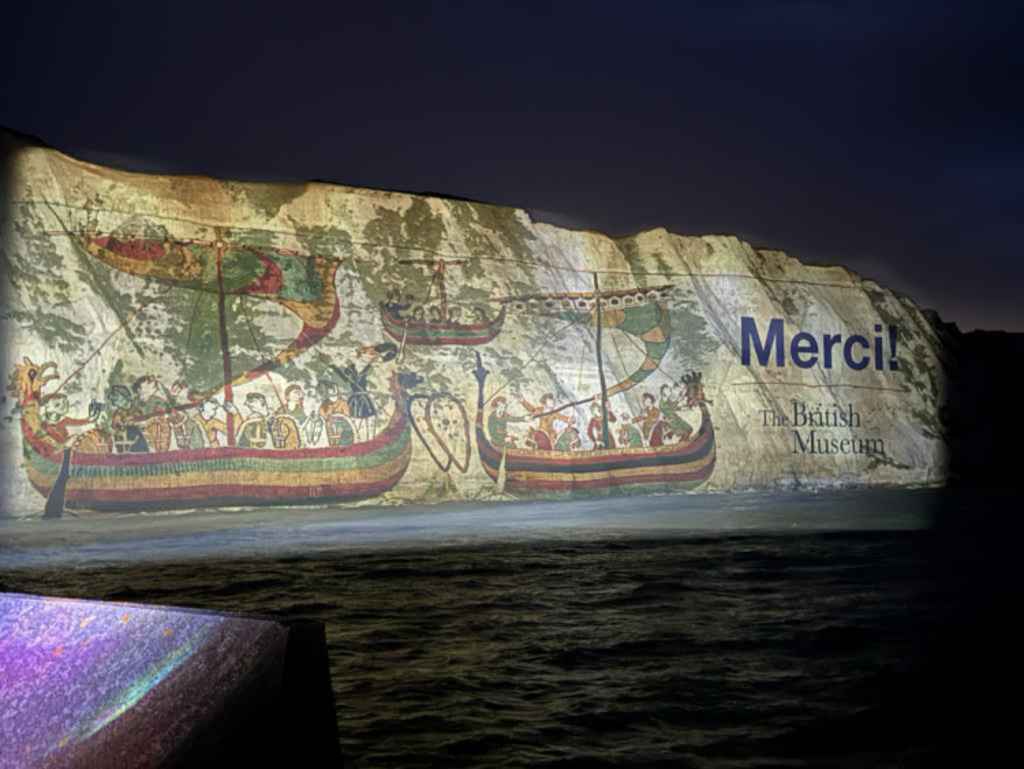
The single-night projection was created to mark the forthcoming return of the Bayeux Tapestry to England, with imagery based on the historic work appearing across the cliffs alongside the word “Merci”.
The British Museum developed the original creative concept, with Pixel Sharp responsible for translating it into content and a projection system capable of working across the large, irregular surface of the cliffs.
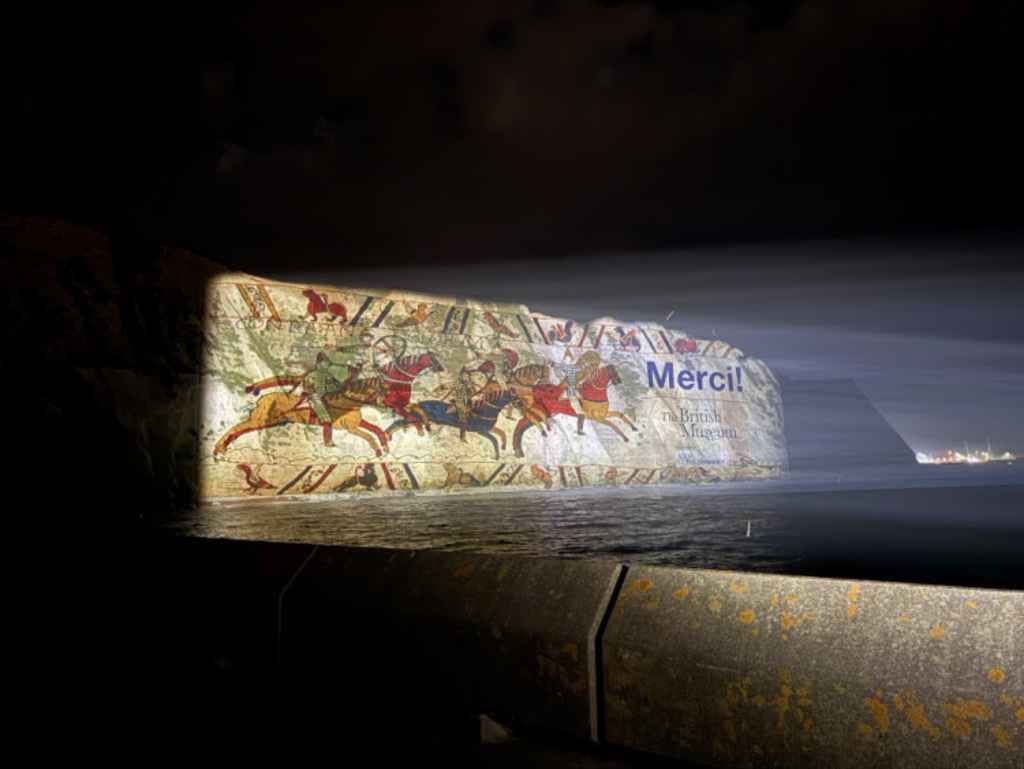
Pixel Sharp founder and director Jon Sharpe worked with the museum’s content team to establish the usable projection area and adapt the creative treatment around variations in the chalk surface, vegetation, colour and contrast.
“Projection is light,” Sharpe said. “You have to make sure that the colours are going to give you enough punch.”
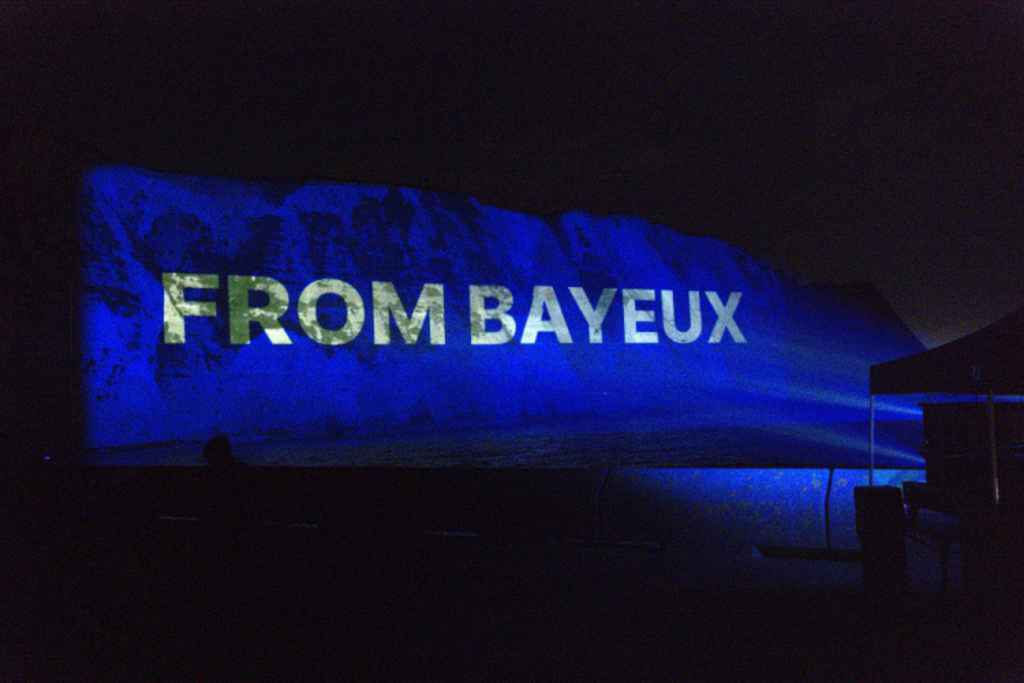
Typography and content positioning also had to be adapted to remain legible at scale, with alternative layouts prepared to account for the characteristics of the projection surface.
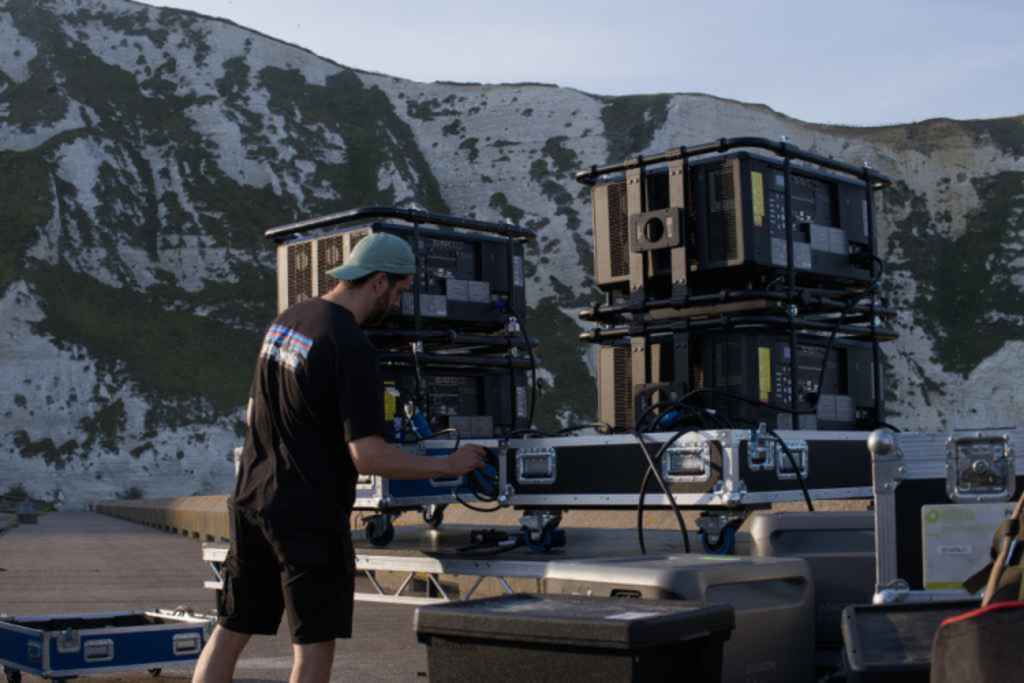
Four Panasonic RQ35K 4K laser projectors were deployed in two double-stacked pairs. With no mains electricity available at the remote location, the complete projection system was operated from portable battery power.
Sharpe said familiarity with Panasonic’s projector platform was also important given the limited installation window, citing straightforward lens handling, familiar controls and a consistent operating approach across different generations of products.
The limited access to the site also made projector size, weight and installation requirements significant factors in the system design.
“When I choose technology, I’m always thinking about the logistics of installing it and how many people I’m going to need,” Sharpe said.
“If you’re doing a mapping job with multiple projectors, we’ll always choose 3-Chip DLP,” Sharpe said. “The colours are going to match, the adjustments are going to be better, and the uniformity throughout the image is going to be cleaner.”
The team had only a short evening window to position the projectors, align and map the content, test the system and capture the finished projection.
Weather added a further challenge, with fog temporarily obscuring the cliffs during mapping before an approaching electrical storm forced the team to shut down earlier than planned. The required imagery was captured before the system was powered down.
Sharpe said the project demonstrated the ability of projection to place digital content directly within a physical environment rather than confining it to a conventional display.
“The whole value is that you can take your message and give it context by placing it on a location, or by changing the shape of how it’s viewed,” he said.
Image credit: Pixel Sharp/The British Museum