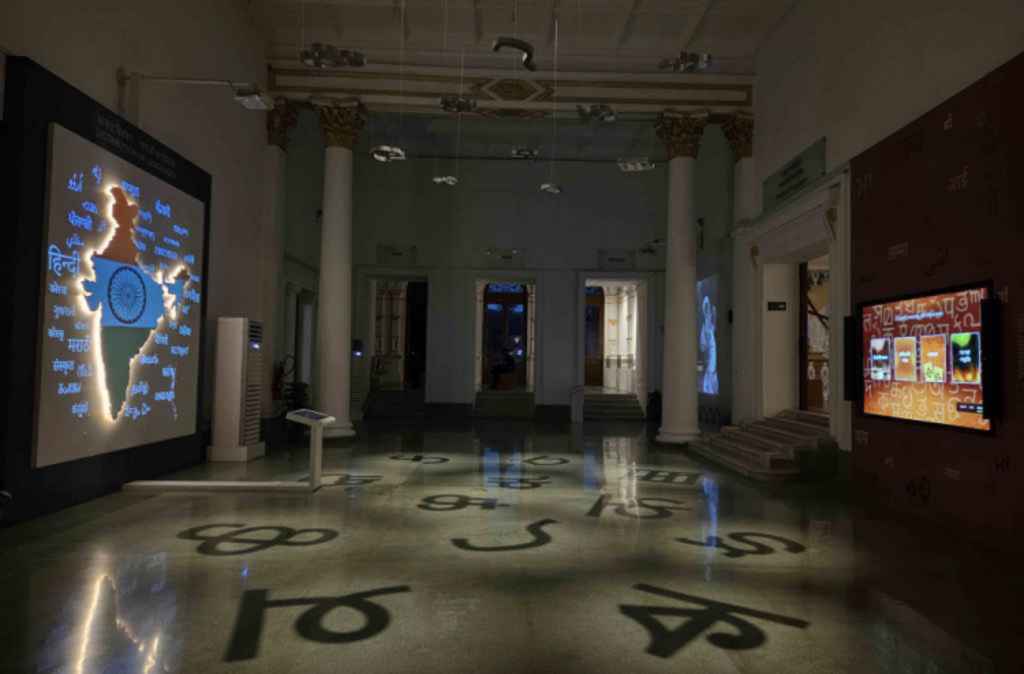
Christie projection and display technology has been deployed throughout the Museum of Word in Kolkata, India, supporting interactive and multimedia exhibits exploring the country’s linguistic and literary heritage.
Located inside Belvedere House at Kolkata’s National Library, the 2,282 sq m museum comprises nine galleries and is described as the first museum in India dedicated to language.
The museum was designed by Dronah, with MSS World implementing the AV systems and Pavilions and Interiors acting as the main contractor responsible for delivery of the exhibits.
A total of 16 Christie 1DLP laser projectors were installed across the galleries and experiential spaces. The deployment includes 11 Captiva DWU500S ultra-short-throw projectors and five models from Christie’s Inspire Series, including the DWU760-iS and DWU960ST-iS.

The Inspire projectors are paired with a 0.65-0.75:1 fixed short-throw zoom lens, while the Captiva units are used where large-format images must be produced from restricted projection distances.
Pratik Wadhwa, CEO of MSS World, said: “Creating engaging multimedia exhibits throughout the museum required projection solutions that could adapt to a variety of spaces and applications.”
He added: “By matching different projector models to the specific needs of each exhibit, we were able to create engaging visual displays throughout the museum without compromising design or visitor flow.”

The projection systems support exhibits charting the development of language and communication from oral traditions and ancient manuscripts through to contemporary digital communications.
Christie technology is also used for a range of other displays throughout the museum, including 22 4K UHD LCD panels supporting interactive exhibits and digital content.
Rishubh Nayar, ProAV sales director for India at Christie, said: “The Museum of Word is a remarkable example of how technology can be used to preserve, celebrate, and share India’s rich linguistic heritage with future generations.”
He said the combination of projection and interactive technologies was intended to allow visitors to experience language through more immersive and collaborative exhibits rather than through static information displays alone.