Auracast has the ability to change lives, but where are we with the adoption of this assistive listening technology? Paul Milligan speaks to different parts of the supply chain to find out.
First emerging in early 2024, Auracast uses Bluetooth technology to enable high quality audio to be broadcast by one device and picked up by many other devices, without needing to go through a pairing process. It can be used equally at home, in the workplace, or in public spaces such as railway stations or airports.
The technology, developed (and owned) by the Bluetooth Special Interest Group (SIG) is especially significant to the assistive listening sector, and to those with hearing loss. But it can also be used for language interpretation, as well as streaming audio, and audio description for the blind. It also has benefits for those who are neurodiverse, who need sonic isolation in order to concentrate or block out unwanted background noise.
What impact has Auracast had in the AV world two years on from its introduction? We gathered a selection of experts, from hearing aid manufacturers to assisted listening system (ALS) suppliers to system integrators to find out.
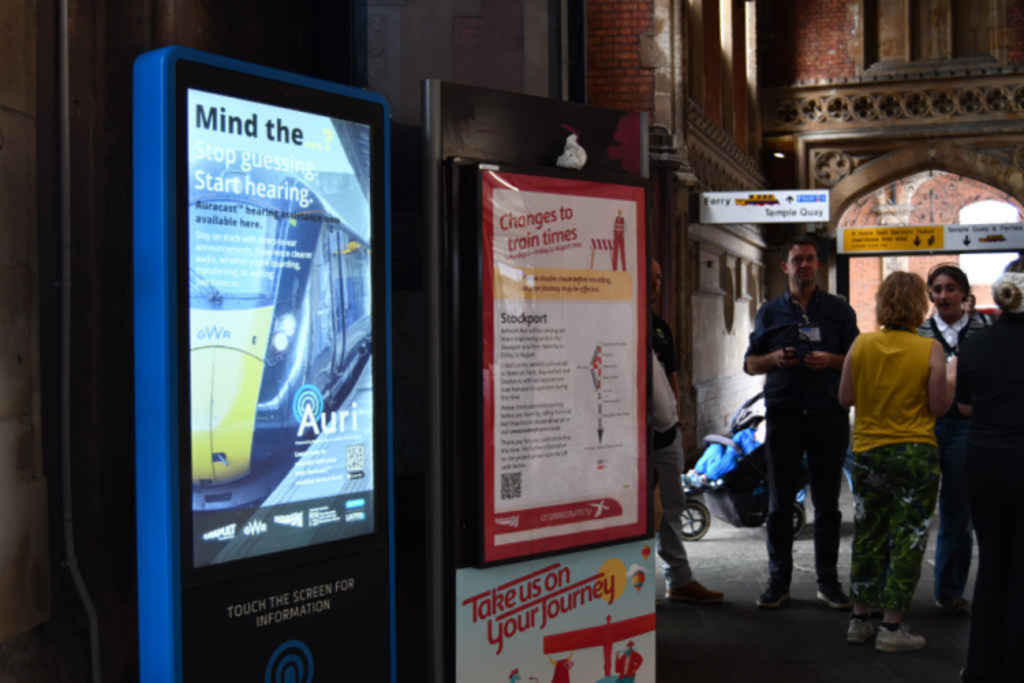
We began by asking what the adoption of Auracast technology has been like so far? “We’ve been extremely pleased with it,” says Per Persson, VP of international sales and product management for Williams AV. “Usually when we introduce something new, it takes a few years before it really starts rolling. Auracast has been different and really exceeded our expectations.”
Another reporting positive interest is Anthony Lear, AV design engineer for systems integrator Kinly. “I’m seeing a lot of people interested, especially from, and for, hearing aid users. I’ve seen quite a lot of discussion on forums and social media groups from people looking to replace traditional loop systems with Auracast.”
In workplaces, the response has been more muted he adds: “For corporate AV, it’s trying to find a client open to new technology. Some will just want the traditional loop system and say I’m happy with that. We’ve also used IR systems, we know how secure they are and how to manage them, whereas Auracast is something new and different.”
Two years on, there are several players in the ALS product segment, with two taking an early lead, Williams AV and Ampetronic/Listen Technologies. Getting to market first has paid off it seems. “Looking at the historic trend lines when we’ve introduced new technologies, [we thought] it’s going to be much slower. But we doubled what we expected to do last year, the adoption has been unprecedented for the introduction of new technology into an existing application,” says Sam Burkinshaw, head of global business development for Ampetronic/Listen Technologies.
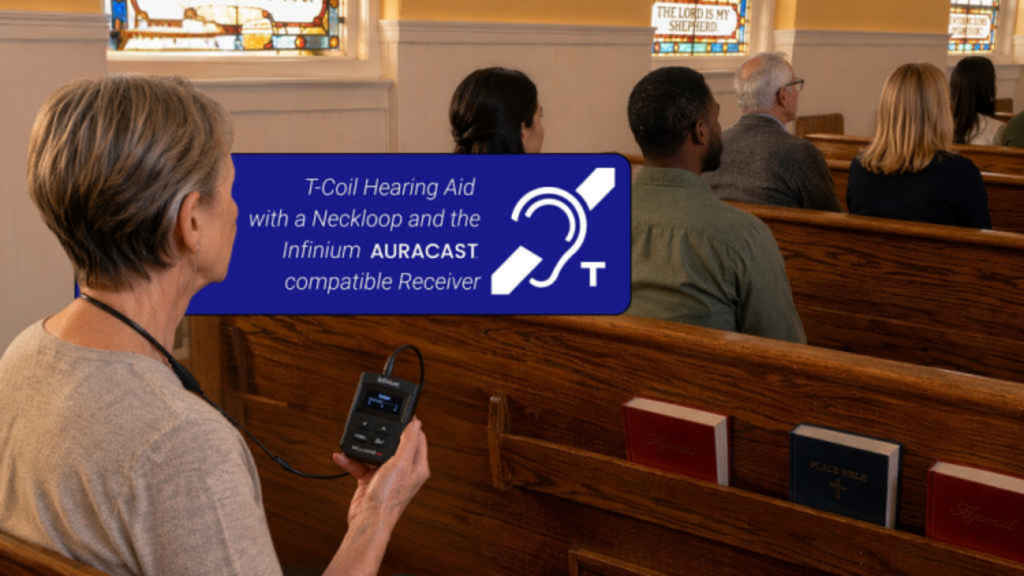
Adoption is being driven by demonstration says Stuart Harris, technical sales manager for systems integrator GVAV. “When we get the product in front of end users and show them how easy it is to deploy and use, then the uptake is really positive, and they go down that route as their standard method of rollout of ALS. When you don’t show them the product and its advantages, yes they’ve probably heard about it, but they will probably stick with their current methods, whether that’s an in-floor induction loop or IR.”
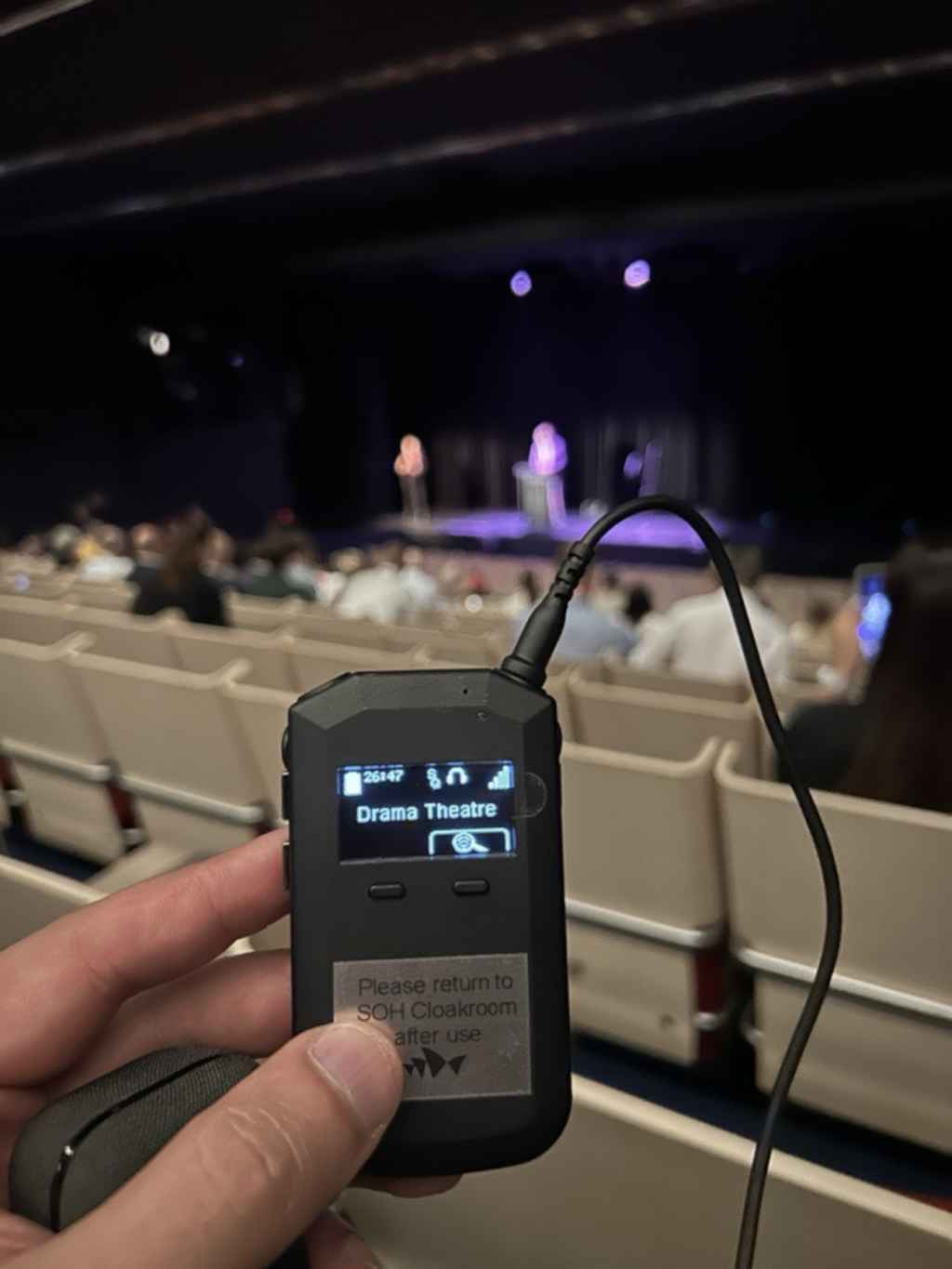
Auracast has moved quite quickly from a specification on paper to something people can experience in venues says Thomas Olsgaard, principal engineer from Danish hearing aid manufacturer GN Hearing. “In the last few years, we’ve seen it installed in complex, high profile environments like Frankfurt Airport and the Sydney Opera House. These are demanding places in terms of acoustics, safety, and visitor expectations, so the fact that Auracast is running there tells us the technology is ready for everyday use, not just pilot trials.”
Auracast is making its way into different applications, but where are we in the adoption phase? Still in early stage says Lear: “People are interested, they’re wanting to explore it, we’re seeing it being pushed as the next generation of ALS. The development of personal products is key, as they reduce the likelihood of users feeling like they stand out. By being more discreet or transparent in their design, these products can help users feel more comfortable and included.”
For Auracast to become established, three factors need to align explains Olsgaard: devices (hearing aids, earbuds, headphones, TVs etc), venues (more airports, theatres, live music spaces, universities, houses of worship and public buildings), and awareness (buyers need to build trust it will work consistently on their own compatible devices).
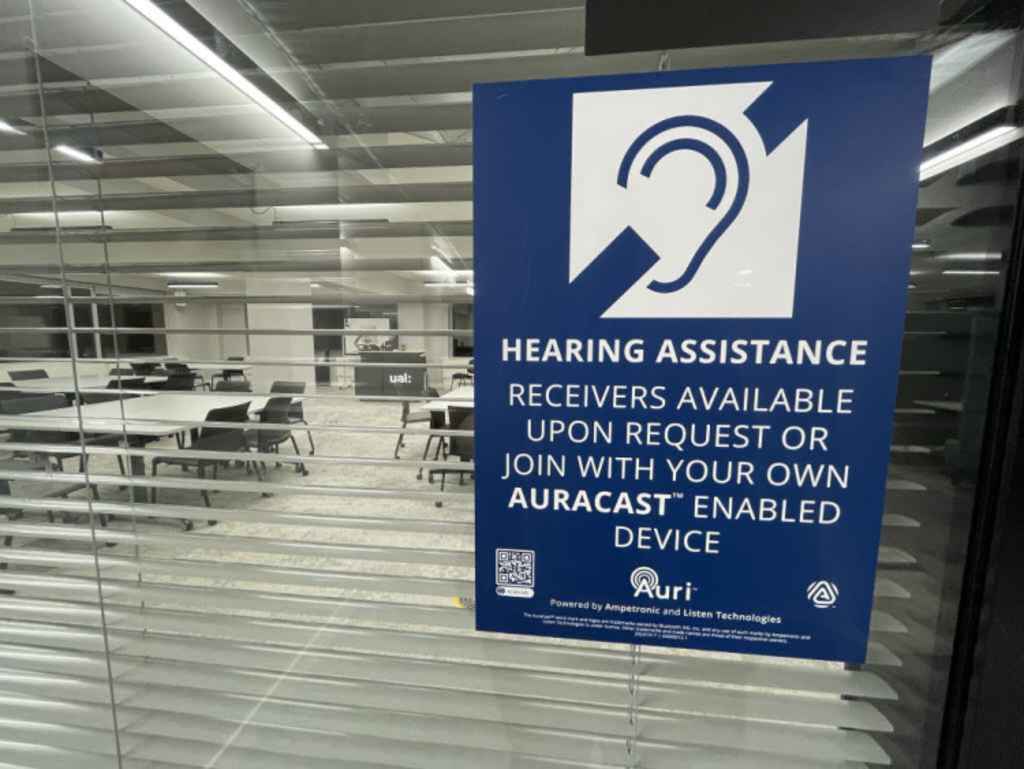
GVAV’s Harris feels we’re probably closer to mid-phase of the adoption cycle, citing the popularity of Auracast in the number of universities embracing it in the higher education sector: “It seems to be the preferred choice with new builds especially. It’s very simple to deploy, relatively cost-effective, and people are still buying receivers and neck loops because they can’t rely on users having Bluetooth-enabled ALS, or access to the limited number of compatible headphones currently available.”
The road to mainstream status is going to be a long one says Chris Gardner, technical director for systems integrator Universal AV. “On the device side, things look promising. Manufacturers have spent the past year proving the tech works across brands, and the results are encouraging. If you buy a flagship device today, there’s a good chance it’s Auracast-ready. The problem is that readiness doesn’t equal usefulness.
"Auracast’s real power only shows up when public spaces install transmitters, and that’s where the rollout slows to a crawl. Some are holding off until international standards are finalised in 2027. Others simply don’t see the urgency yet. Devices will get there first, likely within the next couple of years. Venues will take longer, three to five years at minimum. Unless something dramatic shifts, Auracast won’t feel truly ‘everywhere’ until around 2030.”
Is legislation to increase accessibility across the workplace and in public spaces a huge driver in the adoption of Auracast systems? Or has its success so far been down to a case of right product at the right time? It is both says Olsgaard. “Legislation creates the obligation; Auracast changes what ‘good’ looks like within a broader, mixed toolkit. Accessibility regulations in many countries already require assistive listening in public venues. Those rules matter, because they say clearly: people with hearing loss should not be excluded from shared spaces.
As these systems reach end of life, Auracast becomes a strong candidate for ‘one’ of the ways we meet and exceed those obligations. But Auracast goes beyond minimum compliance. It aligns with how people already live with audio: using their own hearing aids, earbuds or headphones.” What’s helping hearing accessibility in general is the European Accessibility Act that came into full effect in June last year says Persson, but he is keen to acknowledge “that is not an Auracast-specific legislation”, and actually “legislation is probably tracking behind (Auracast) a little bit.”
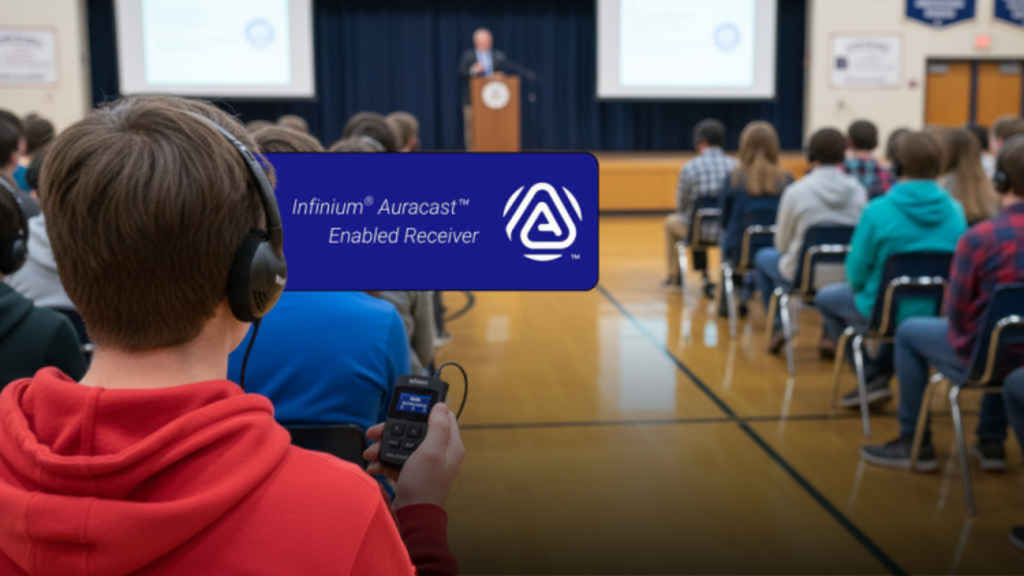
The key international spec for assistive listening over Bluetooth LE Audio isn’t expected to be finalised until 2027 explains Gardner. “Without that, governments can’t require venues to install Auracast, and venues can’t justify ripping out existing hearing loops just to chase a future-leaning technology. What is driving Auracast today is something more organic, a sense that the timing is finally right. The hearing-aid industry is hungry for a modern, universal wireless standard.”
Looking at this issue geographically for a moment, are there countries or regions lagging behind in adoption? In terms of top three regions for Auracast, it’s the UK, Australia, and the US leading the charge, followed by Norway and Denmark says Burkinshaw. “As we get further around Europe and the Middle East, they’re on a different trajectory. Awareness is part of that, but there’s also that background of accessibility legislation, which varies between those countries.”
Looking at the product side now, are there enough products in the market to satisfy different requirements? Or has product development been slow so far? “Right now, the honest answer sits somewhere in the middle,” admits Gardner. “On paper, the ecosystem looks promising. A handful of companies and a few early Bluetooth LE audio specialists have rolled out the first generation of Auracast transmitters. For small rooms, demo spaces, and controlled environments, the hardware is already good enough. But public venues aren’t small rooms.
"Airports need multi-zone coverage. Stadiums need high-density broadcasting. Universities need systems that can survive a decade of IT turnover. And for those use cases, the product landscape is still thin.”
Not every niche is perfectly covered yet agrees Olsgaard, “and some venues will keep legacy systems running in parallel for a long time. That is not a problem, in fact, it is often the most inclusive approach. The goal is not to rip and replace everything with Auracast, but to give venues more flexible tools so they can serve more people better.”
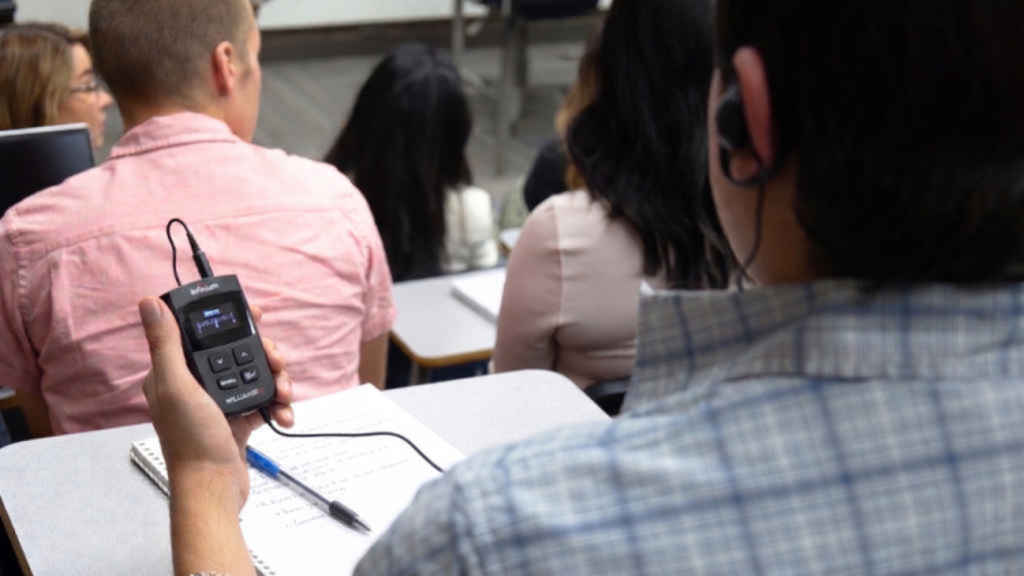
Kinly’s Lear is optimistic that, because Auracast is a Bluetooth technology, as new products get developed it will simply be built into applicable hardware naturally. “Hopefully it’ll be built into the next range of UC and VC devices to provide an improved meeting room experience.” The point Lear makes here is a key one, the real adoption of Auracast will happen when it’s integrated into other products: “If it can be built into devices, the product and the technology becomes more accessible. When it gets built into devices we use daily, such as displays, we can connect to it and listen to the audio directly from the display,” adds Lear. Like so many product innovations before it, simplicity will be key to mass adoption for Auracast.
Key directions for the technology to develop according to Olsgaard include ensuring stable, low-latency performance in high-density deployments, increasing seamless discovery so users move towards an experience where all the available options are visible (Auracast streams, caption feeds, language channels) in one intuitive interface and can choose what works best for them in that moment.
Flexible access is key too, keeping public information open while allowing classrooms, corporate events or paid tours to use private or password protected broadcasts when appropriate, and finally layered accessibility, combining Auracast audio with live captioning, multiple language options and personal sound profiles so people can tailor their experience without drawing attention to themselves.
To wrap up let’s talk about the end users of the technology, what has feedback been from users so far? How have they seen the benefits of Auracast? “Everyone that’s used these systems say it’s clean, it’s crisp, it just works. It seems to have the quality that induction loops and IR doesn’t have,” says Harris. “In venues like the Sydney Opera House, we have seen very emotional reactions. When Auracast was introduced there, many audience members with hearing loss were in tears, not because of the technology itself, but because, for the first time, they could experience the full power of the music on the same terms as everyone else,” says Olsgaard.
Nearly everyone we posed this question to gave a similar response, users regularly become emotional during demos, such is the increase in audio quality to other ALS. “At last year’s InfoComm we had a man walk up to our stand, turn on the Auracast on his headphones and listen to the live microphone and he was close to tears,” says Persson. The most common reaction from users especially those with hearing loss is almost visceral adds Garner. “People describe the audio as cleaner, closer, and more stable than anything they’ve heard from traditional PA systems. In crowded environments, the difference is dramatic. Instead of fighting room acoustics, they get a direct, low-latency stream that feels like someone speaking right into their ear. The biggest frustration isn’t the technology. It’s the absence of places to use it.”
And that’s the real crux of this situation, Auracast can make people’s lives better, it has far better clarity than other ALS available, it’s easy to use and easy and cheap to install. Adoption needs to be increased, and quickly, and as more manufacturers and products come on board that will happen. If it fully meets its enormous potential, Auracast has the power to be one of the AV industry’s truly ‘feel good’ stories of the past few decades.
Last word goes to Persson: “We’re just not selling a black box that does something and it’s going to get installed. This actually has an impact on people’s lives."