Krazy Kanguruh, one of St. Anton am Arlberg’s best-known après-ski venues, has reopened following a complete rebuild with a new L-Acoustics sound system designed to deliver high-output music while limiting noise spill to neighbouring properties.
The 1,200-capacity Austrian venue, founded in 1965 and owned by Olympic gold medallist Mario Matt, was demolished and rebuilt ahead of the 2025/26 winter season. Its new audio system was designed by Signal Sound & Light in partnership with regional integration specialist Musik Tirol.
The brief was to create the energy expected from a major après-ski venue, where music runs from midday until 8pm, while keeping sound contained within the building. This was particularly important because of the venue’s proximity to surrounding businesses and residences.
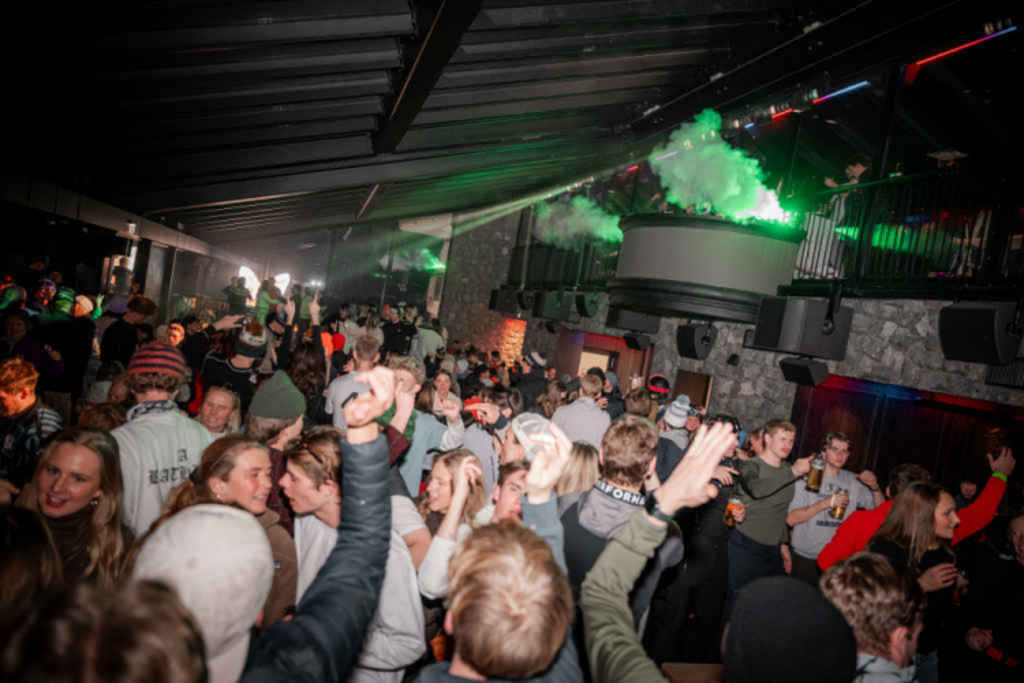
A major design challenge came from the venue’s retractable glazed roof, which meant conventional ceiling-mounted loudspeaker positions were not possible. Extensive glass and hard stone surfaces also created a reflective acoustic environment, requiring a distributed system with careful coverage control.
Signal Sound & Light modelled the system in L-Acoustics Soundvision before installation. The main floor uses five X12 loudspeakers flown between six KS21i subwoofers arranged as a 14m bass array, with additional X12, 5XT and X8i loudspeakers providing coverage across the venue. The upstairs restaurant area is served by 5XT and X8i loudspeakers to maintain tonal consistency in a lower-energy setting.

The bass array was central to meeting the venue’s noise control requirements. By aligning the array’s low-frequency attenuation toward neighbouring properties, the design team was able to reduce external sound spill while maintaining high SPL levels inside.
The system also had to integrate with a wider Dante-based audio architecture. Connectivity with the Yamaha DSP matrix processor was achieved via AES/EBU to AVB integration using an LC16D audio converter.

Following calibration, the team assessed sound levels from the adjacent ski slope and neighbouring properties. According to Signal Sound & Light, even with the roof open and the system operating at high output, sound was barely perceptible at nearby buildings.
Siegfried Maier, head of sound at Signal Sound & Light, said the distributed configuration was designed to reduce external impact while delivering consistent coverage and clarity inside the venue.