Corporate audio is evolving beyond rack rooms and rigid signal paths. As workplaces become more flexible and IT-driven, distributed, network-based amplification is reshaping how enterprise sound systems are designed and deployed.
Corporate AV design has changed fundamentally over the past decade. Where once the focus was on delivering reliable sound reinforcement to a defined set of meeting rooms, today’s corporate environments demand something more fluid. Hybrid collaboration, divisible spaces, enterprise-wide messaging and multi-use areas are now the norm. Systems must be standardised across global offices, aligned with IT policies and simple to manage remotely.
In this context, the question for integrators is no longer how much power an amplifier can deliver. It is how intelligently the system is structured.
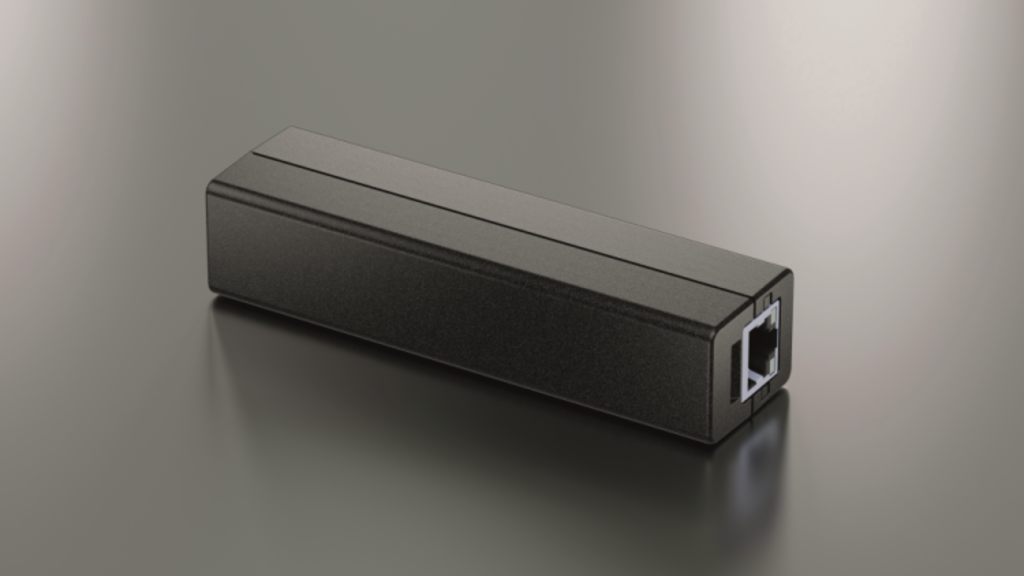
A growing number of projects are shifting away from centralised, rack-heavy audio distribution towards a more network-driven, distributed approach, what Powersoft terms Dynamic Music Distribution (DMD). At the heart of this model are compact PoE+ amplifiers such as Nota, designed not for the rack room but for the edge of the network.
Zones, not racks
Traditional music distribution systems rely on layers of dedicated hardware: mixers, matrix processors, zone controllers and central amplifiers. While effective, these systems are inherently static. Expansion often means adding more equipment, more wiring and more cost. Reconfiguring a space can quickly become a physical exercise rather than a logical one.
DMD consolidates routing, DSP, switching logic and zone control within the amplifier ecosystem itself. Instead of building systems around racks of equipment, integrators design around zones, the way spaces are actually used. In modern offices, a divisible meeting suite may need independent audio in the morning and unified sound for a town hall in the afternoon. An open office might require background music throughout the day but priority paging at any moment.
A collaboration hub could be reconfigured for an internal event with minimal notice. In a distributed architecture, these changes are handled through configuration rather than cabling. The physical infrastructure remains stable while the logical structure adapts.
Why distributed PoE amplification?
• Power and audio over a single Ethernet cable
• No central amplifier rack required for small zones
• Simplified retrofits in live buildings
• Scalable across multi-site deployments
• Easier expansion as spaces evolve
Power, audio & control
One of the key enablers of this approach is the existing Ethernet backbone. Most contemporary office buildings are already equipped with managed PoE+ switches. Using that infrastructure for audio distribution eliminates the
need to run separate AC power and analogue audio lines to every zone.
Powersoft’s Nota is designed specifically for this environment. Delivering up to 140 W across two channels via PoE+. it combines power and data over a single cable. Its compact form factor and plenum rating allow installation above ceilings, under tables, inside wall boxes or on DIN rails, close to the loudspeakers it drives.

For integrators, this can translate into shorter installation times and cleaner infrastructure, particularly in small meeting rooms and huddle spaces. Retrofit projects benefit too. In operational buildings where disruption must be minimised, the ability to deploy amplification directly over the network can significantly reduce labour and cabling complexity. In a DMD system, loudspeakers are grouped into logical zones. Sources are assigned to those zones through software rather than physical patching. Level switchescontrol, source selection, muting and scene management are handled within the amplifier ecosystem itself, reducing the need for external matrix processors.
Support for AES67 further strengthens this model. In an AV-over-IP environment, audio becomes a network resource rather than a fixed analogue path. A USB-connected laptop in one room can be made available elsewhere. A paging input can be prioritised across multiple zones without repatching hardware.
Nota’s USB-C-to-AES67 capability allows it to act as a bridge between local multimedia devices and the wider AV-over-IP backbone. In collaboration-heavy environments, where user devices are constantly connected and disconnected, this flexibility reduces redesign when room functions change.
Scaling up
Enterprise customers increasingly demand identical meeting experiences across offices, cities and continents. Within Powersoft’s ArmoníaPlus environment, amplifiers, loudspeakers, sources, and zones are configured through
a structured workflow. Once validated, room designs can be templated and duplicated across multiple projects. This approach helps ensure predictable gain structure, consistent zone logic, and standardised user interfaces, while reducing commissioning time.
In distributed systems, intelligence at the endpoint becomes critical. Nota incorporates onboard DSP, automatic impedance matching setup, and speaker health monitoring, alongside API compatibility for third-party control integration. Rather than relying on a single central processor, processing is embedded locally. Each room operates autonomously while remaining part of a unified network. This architecture enhances resilience. A fault in one area does not necessarily affect the entire system.

Remote visibility is equally important. Through Powersoft’s MyUniverso cloud platform, integrators and AV managers can access real-time diagnostics and system status information. Issues can often be identified, and sometimes resolved, before they disrupt users. This opens the door for integrators to implement proactive service models and access recurring revenue strategies, while end users benefit from IT-aligned oversight of AV infrastructure.
As AV systems become native to the network, cybersecurity becomes a design consideration rather than an afterthought. Corporate IT teams expect devices to align with enterprise security policies, from controlled network access and user authentication to encrypted communication and secure remote management. By operating within standard IT infrastructure and supporting secure cloud connectivity, DMD architectures are designed to integrate into managed network environments without creating isolated AV silos.
Energy consumption is now tied directly to corporate sustainability targets. Centralised systems are often oversized to accommodate future expansion, leading to unnecessary idle consumption. A distributed model allows amplification to be deployed only where required.
Combined with energy-efficient amplifier topology and standby management, PoE-powered systems can contribute to reduced operational expenditure, particularly when scaled across multiple sites. More broadly, DMD reflects the direction corporate communication infrastructure is heading. Offices are modular and teams expand and contract. Spaces transition between collaboration, presentation and event modes with increasing frequency.
In today’s corporate landscape, communication systems can no longer be static installations. They must be dynamic platforms, ready to evolve as quickly as the spaces around them.
www.powersoft.com