Two up-scale entertainment venues have been created inside an old iconic TV studio in the UK. Paul Milligan finds out how it was done.
Opened in 1956 as the UK’s first purpose-built TV centre, the old Granada Studios is a landmark in the city of Manchester. It was once home to Coronation Street, the UK’s biggest soap opera for more than 50 years, and saw The Beatles’ first ever televised performance.
Today the studios are part of a huge redevelopment happening in the heart of the city, which includes a number of luxury hospitality and leisure offerings and event spaces. The latest of which has become the first Soho House (a chain of private members clubs) in Manchester and Mollie’s Motel & Diner.
Tasked with designing and installing the AV for both brands, which are two separate projects on the same site (more will be explained later) was systems integrator Tateside. How did Tateside get involved in this project? “We’ve worked with Soho House Group for a number of years now,” says Jack Cornish, technical director, Tateside. “We’re involved with all of the different facets of the group (Soho House, Soho Works etc) in the UK and Europe, and we look after all the UK rollouts.” Soho House as a company has its own design and build architectural practice, called In House Design and Build, responsible for designing its own buildings, so Tateside works with their designers and the technical delivery team on new projects.
This site had been empty for a number of years. The façade was kept but an extension was added at the top of the building, and inside the building has been transformed. Does having an in-house architecture practice help ease the tensions seen on some projects between architects and AV installers? “With Soho House there’s a big expectation on theactual technical delivery of the sound, and the architects understand this,” explains Cornish.
“We do have our battles, trying to push what’s right for the AV versus what’s right aesthetically. But we were fortunate that, on the many train trips between London and Manchester for this project, we were sitting with the architects, so we were able to go through issues together: does this work? Does this not work? Can we change this? It was very good.”
What was the scope of Tateside’s involvement in this project? We should break it into two projects says Cornish. “It’s quite a strange one because ultimately there’s two different entities, Mollie’s and Soho House, in the same building. The connecting part being that Soho House Design and Build designed Mollie’s, but they are actually separate businesses.
They used to be owned by the same group, but Mollie’s was sold, so we’re dealing with two live projects at the same time in one building. For all intents and purposes, they’re two separate projects, with completely segregated networks, segregated different staff teams, so we had slightly different deliverables per project. With Mollie’s, we are the AV consultant and installer. In Soho House, we’re in charge of AV, we supply all the networks, IT, Wi-Fi, switches, and we’re responsible for installing all of that: racking, stacking, patching. Working with their IT team to configure it. We’re not actually managing their IT network, but we’re delivering the solution and procuring it, and installing it.”
The brief for Mollie’s was to create spaces that were as technically capable as they were engaging and fun to be in. The Mollie’s concept, which already has two other sites, is to be a cost effective roadside hotel. But this site expanded on previous models says Cornish: “They spent a long time developing the basement space called Studio IV, which is a bar in the basement with a stage, with a big LED screen, and full live audio setup for bands. It’s a slightly different concept for them, because this site includes an area that can operate as a venue as well. Usually, it’s just a diner.”
The original brief to Tateside may not have changed throughout the whole process, but there were changes elsewhere, caused by the original building contractor going bust in April 2024, halfway through the project, which caused a year-long delay. How did this affect Tateside? “The scope was locked in fairly early, but with the delay some things were upgraded spec wise just because a whole new version had come out by that point,” says Cornish. Mollie’s runs from a basement to the sixth floor, with the hotel rooms taking up floors one to six. “Our remit was to deliver a range of AV systems, consistent with previous Mollie’s installs, and lead in shaping Studio IV into a fully-fledged live performance, broadcast, and playback environment,” explains Cornish. “This included a Boiler Room–style set-up where live performances can be streamed to TVs across the premises, including for in-room entertainment.”
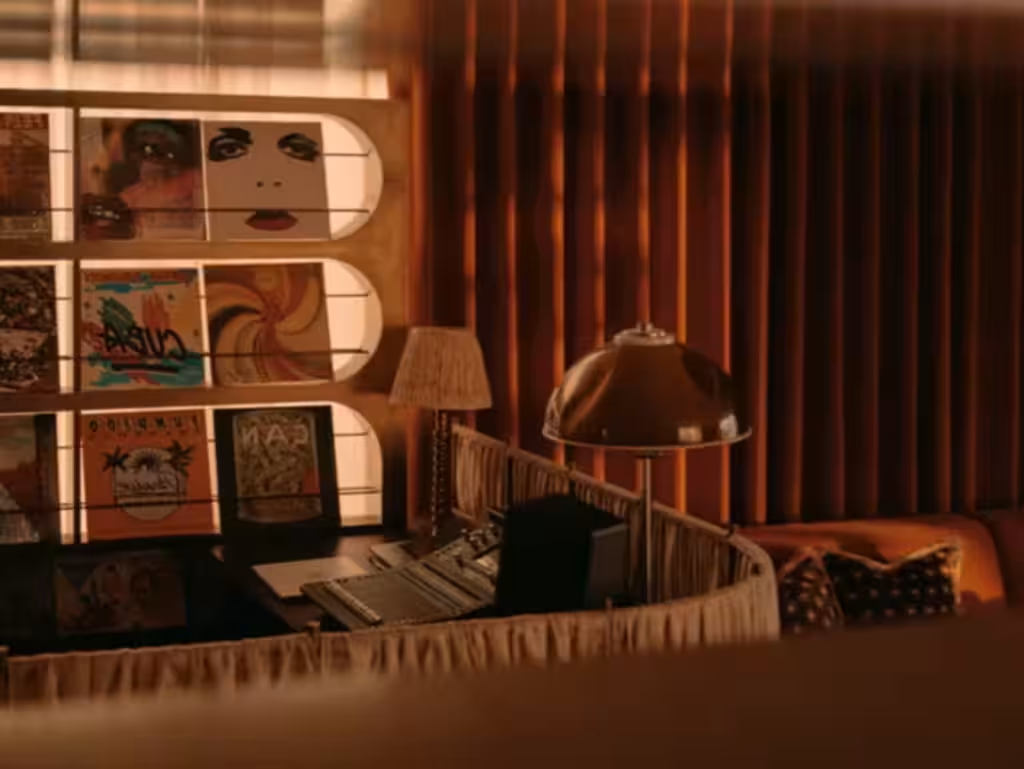
Studio IV is a basement cocktail bar and club space built around a vintage-style wraparound bar and a 3m-wide on-stage LED wall to support live performances or play pre-rendered content. Audio is delivered via a Martin Audio main PA system built around FlexPoint FP15 two-way full-range loudspeakers, supported by SXCF118 cardioid 18-in subwoofers. A distributed system of CDD10 compact loudspeakers and SXF115 15-in subwoofers provides heavy low-end reinforcement, plus dedicated foldback monitors on stage.
Adding to the retro-inspired aesthetic, Tateside also installed Elipson XLS11 loudspeakers above the bar, which are integrated into the wider sound system. IP54-rated weatherised CDD loudspeakers cover the outdoor area. AV control in Studio IV is via a Q-SYS touch panel, and lights are controlled via Q-SYS or a lighting desk. Users of the room can plug an HDMI cable in and wirelessly present or use the faders to turn the volume up and down. “We’re trying to cater for operator- less nights or operator-led nights, we have to provide for both, because it’s very cost prohibitive to hire a sound engineer every night,” says Cornish.
The DJ setup comprises Pioneer CDJs, an A9 Mixer, Technics turntables and Martin Audio CDD-LIVE-8 monitors, whilst Chauvet quad-colour stage lighting is fully DMX-controlled, enabling show control and integration with the visual content on the LED wall. Shure microphones and an Allen & Health digital mixing console complete the performance system, providing versatile kit to accommodate a mix of acts and musical genres. Broadcast and streaming capability is central to the Studio IV concept. A multi-camera BirdDog PTZ system captures performances for live or recorded output. This feed can be distributed throughout the building via a Blustream IP video distribution system, allowing
guests to watch Studio IV sessions live from other public areas and in-room TVs. A dedicated green room provides performers and production staff with live camera monitoring and return feeds.
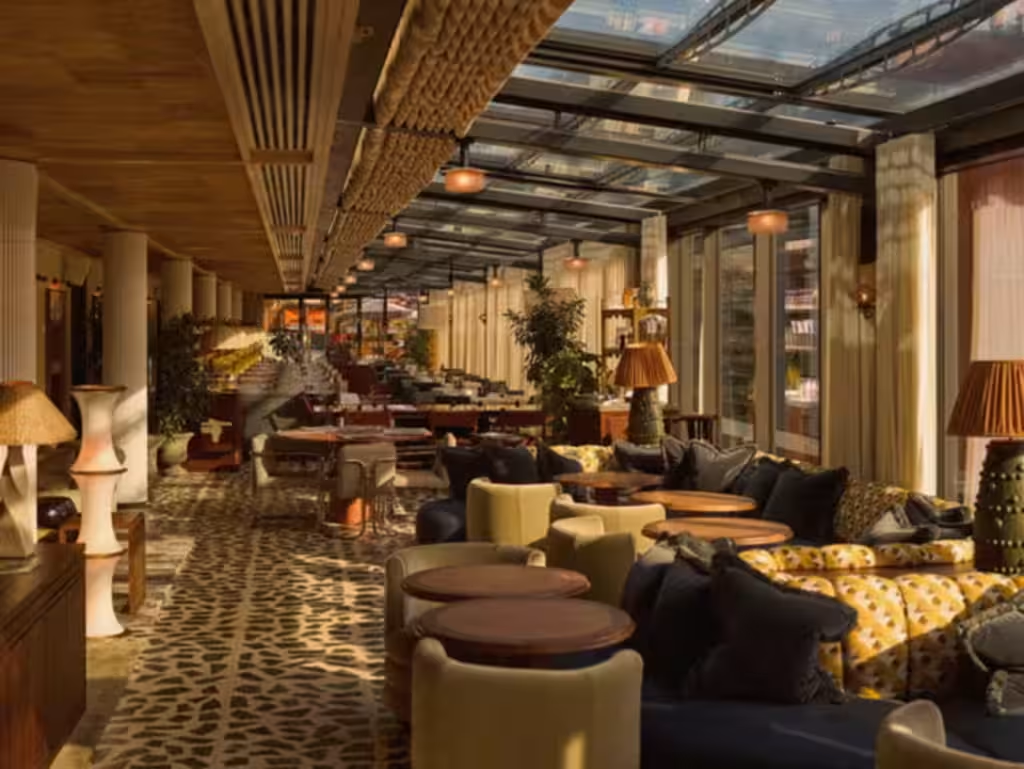
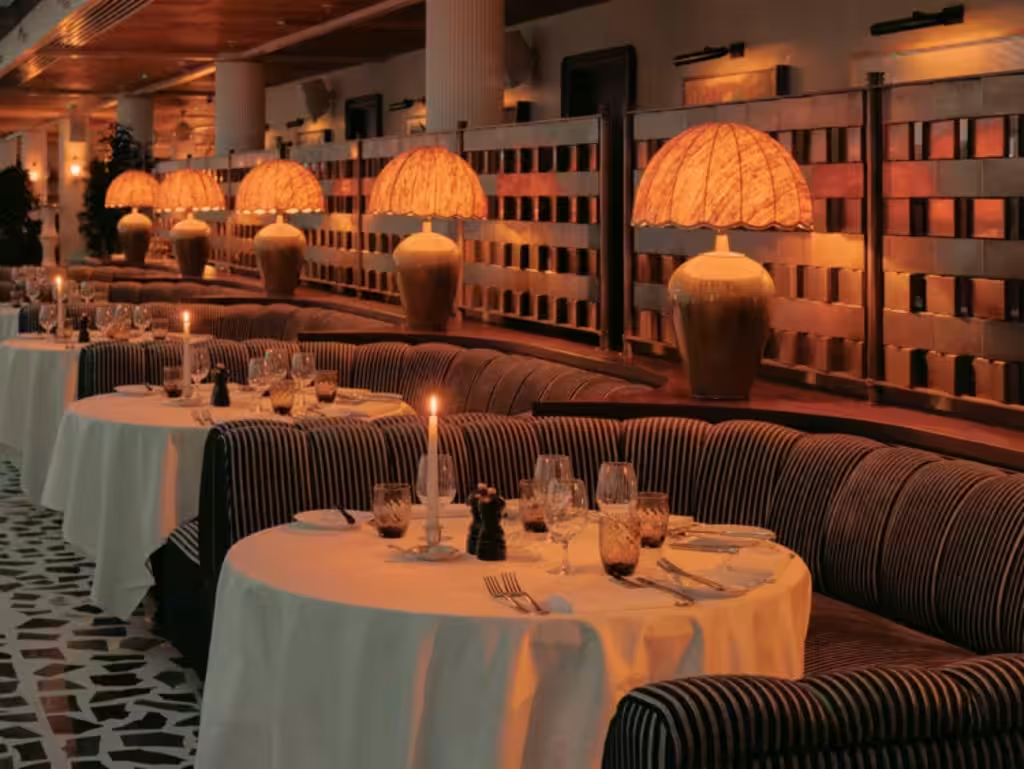
“For Studio IV, we designed and fabricated retro video screens to form part of the distributed video-over-IP system. These sit flush within custom joinery above the bar,” explains Cornish. “Signage and live sports can be streamed on these screens, and they continue the aesthetic of the retro-inspired Elipson Heritage loudspeakers.” Ground floor areas such as the reception and American-style diner are equipped with discreet Bowers & Wilkins AM-1 loudspeakers for background audio, whilst the co-working spaces use Yealink A40 video bars integrated with Q-SYS room control.
Moving onto the other project inside the old Granada Studios, this is Soho House’s first venture in the north of England, and is set across three floors, including club spaces, a lounge, a Club Bar, and soon-to-be-completed wellness and Health Club zones.
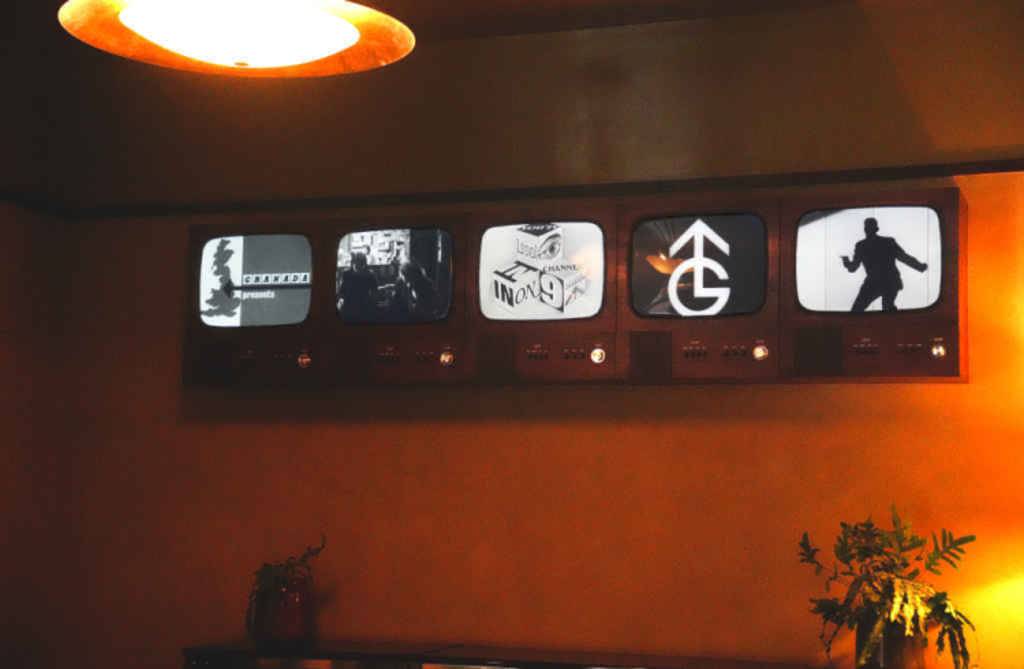
The AV innovation begins in the reception area, where visitors will see a five-screen videowall art piece commissioned from artist, producer, and VJ Hexstatic. For that retro feel, Tateside had to source square screens from China, because 16:9 is the only product available in the current market. “We came up with a concept to get all the old Granada TV shows and host them on BrightSign players as synchronised content. It plays through as slideshows and video clips from the old shows that we’ve grabbed and put together. We’re lucky to have a client that has the vision,” says Cornish.
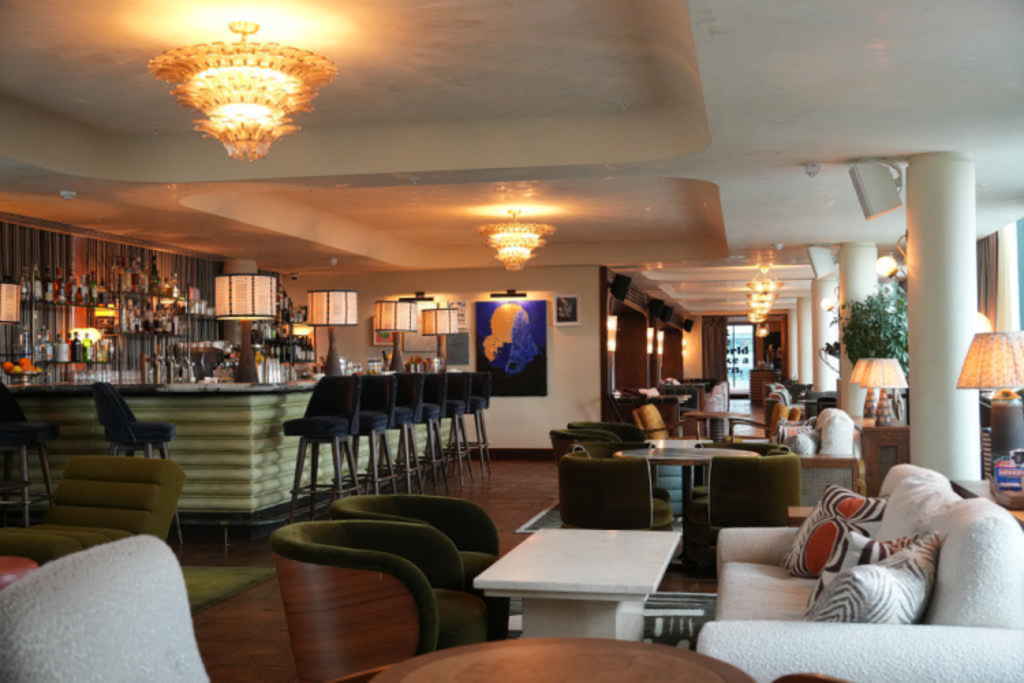
For Tateside, the project focused on the seventh, eighth and ninth floors, including an impressive performance space on the ninth floor with a glass stage offering views across the Manchester skyline. Tateside also equipped a large wellness floor, including open-plan gym, fitness and Reformer Pilates studios and infrared sauna with a background audio system, also based on a Martin Audio system with Powersoft Unica amplifiers and Q-SYS processing. The AV designed by Tateside was conceived as an integrated, architecture-led system, delivering high-quality AV and discreet and thoughtful detailing throughout. Q-SYS Core processing provides full integrated control of audio and video elements across the premises.
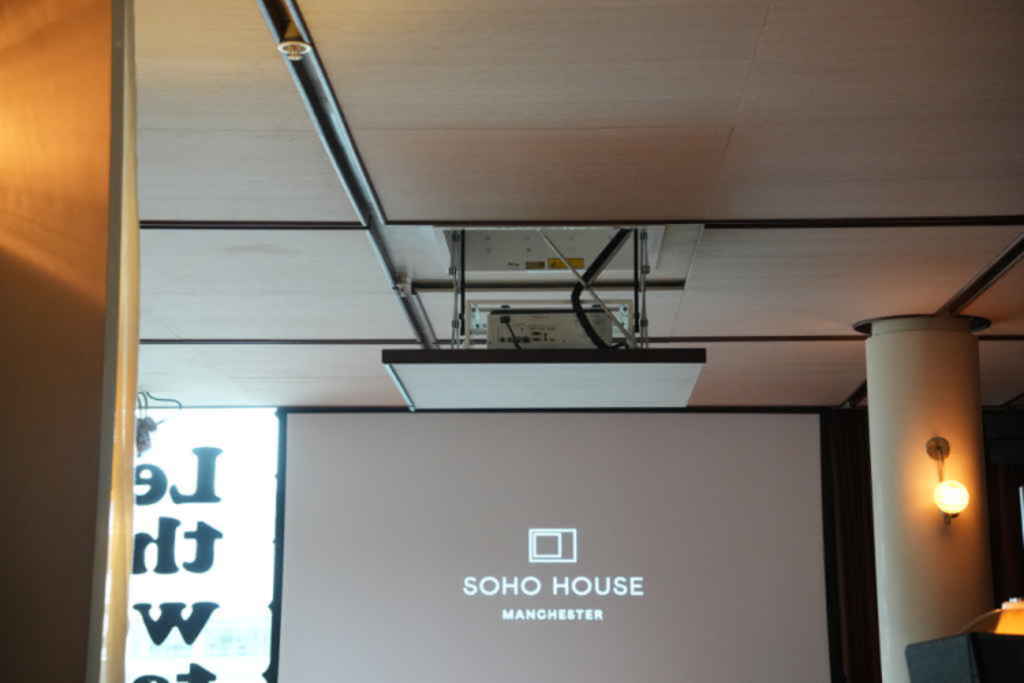
The seventh floor functions as a flexible events space, built around scalable kit that adapts to the many different types of functions hosted there. A Martin Audio sound system supports a range of events from brand presentations to parties and drinks receptions with DJs. The space incorporates projection, wireless presentation capability via AirTame devices and Sennheiser SL series wireless microphones. The mix of kit allows for reconfiguration between corporate events, private functions, or even live performances. An Epson projector, concealed in a Future Automation projector lift, plus 124-in Screenline screen provides large-scale visuals when required.
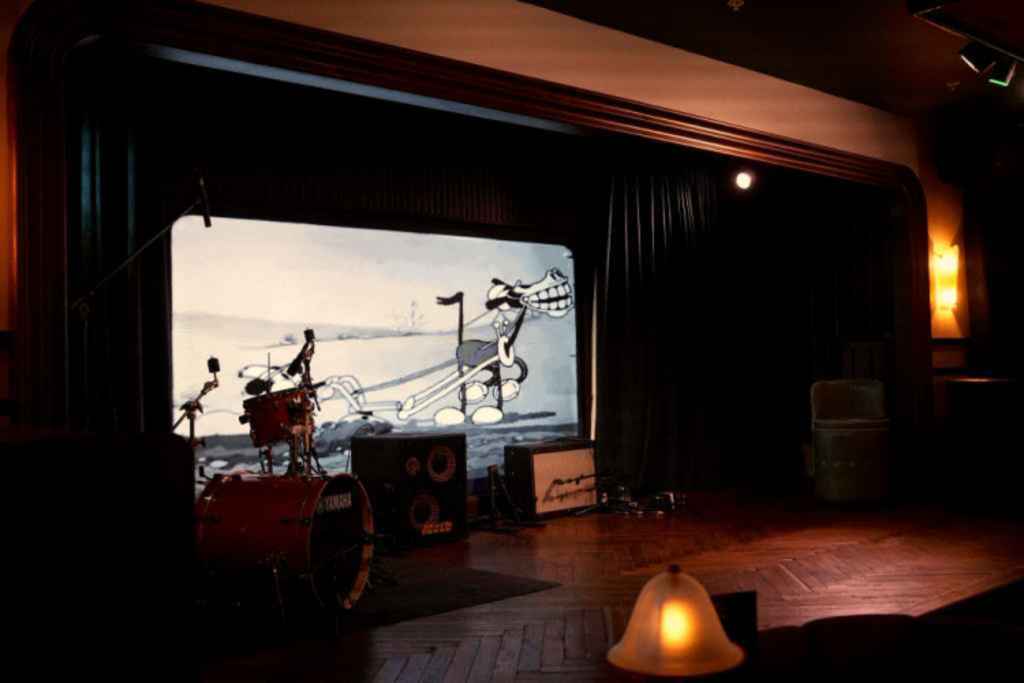
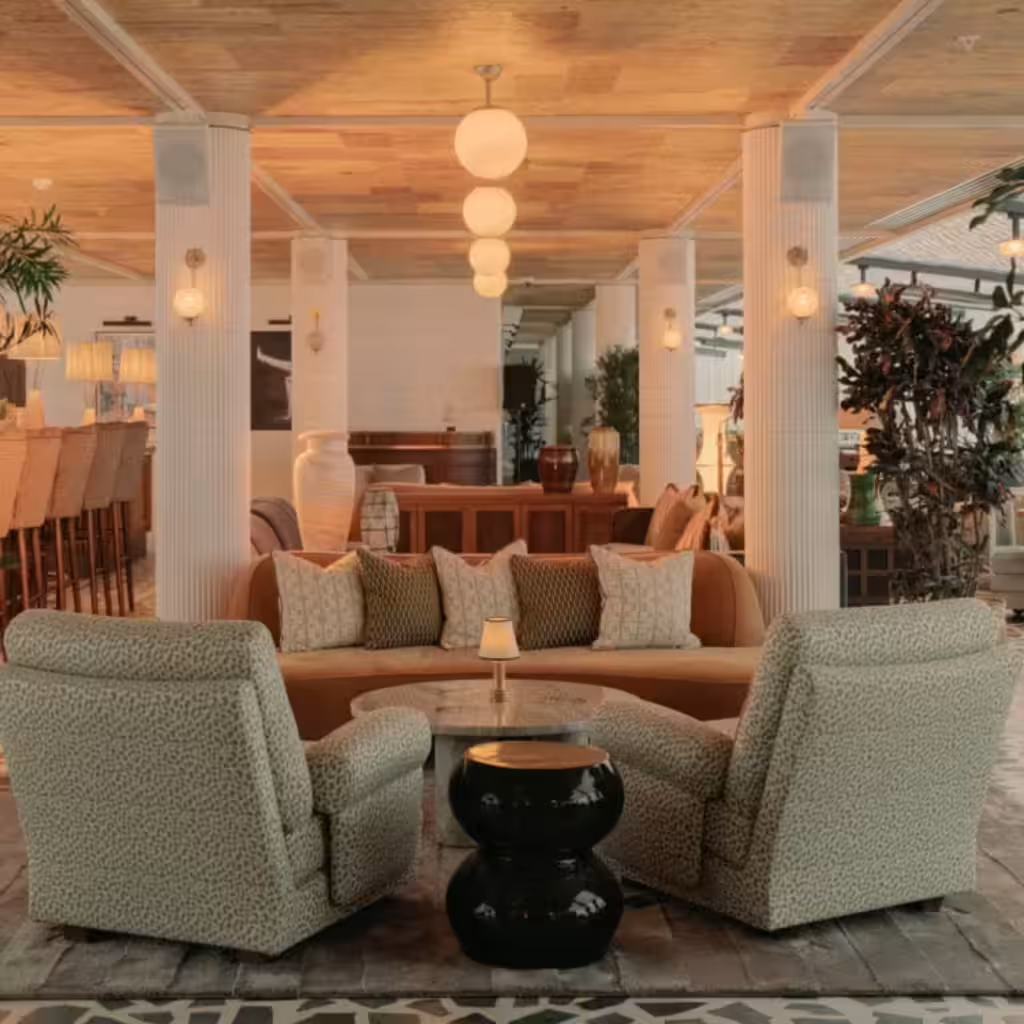
The eighth floor transitions into a more relaxed club lounge environment with city views and an indoor/outdoor covered terrace. Here, the system is built around a further Martin Audio background audio system, based on CDD6B units and SX210 and SX110 subwoofers. Tateside’s integration efforts here often focused on concealment of tech in close coordination with the interior design team: loudspeakers, cabling and control infrastructure are, in many cases, fully integrated within custom joinery. A motorised Future Automation projector lift houses an Epson laser projector hidden in the fabric ceiling panel. Working alongside a Screenline retractable projection screen, it gives Soho House the option for visuals when needed, and when not in use it maintains clean sightlines in keeping with the Soho House aesthetic.
Tateside supplied Pioneer DJ kit including CDJ3000’s and A9 mixers to support in-house DJ sessions. The indoor–outdoor boundary features weatherised audio products extending into the covered terrace area. In the sunbed-lined pool
and bar area, Origin Acoustics bollard-style loudspeakers and Martin Audio CCD6 marine-grade loudspeakers provide coverage outdoors.
The ninth floor is home to the club’s flagship performance level. It includes a large club space and a dedicated live performance area with a full stage, wrapped on three sides by glass walls overlooking the pool. The performance area features d&b audiotechnik 44S loudspeakers clustered in a stacked left-right arrangement. “The system can operate as a traditional stage performance L/R configuration or switch to a dedicated L/R system specifically for screen playback,” says Cornish.
Further d&b 5S loudspeakers provide fill, while two B4 subwoofers take care of the low end, with the whole system powered by a combination of d&b 5D and 40D amplifiers. The DJ workstation houses d&b amplification and processing, with retro-style Pixel Pat lights from Robe integrated via Art-Net back to Q-SYS for coordinated coloured stage lighting control. Tateside were on-site very early on in the process of both projects say Cornish. “We were heavily involved in site visits, checking first fix cabling by contractors. We were there before a lot of building works started happening. As the base build contractor was doing their works, we were invited in to look around and work on those initial plans.
“On projects like these, where it’s so coordinated, you have to be there checking that everything is in the right location. The level of finishes has to be great. For example, if we’re working in our office and a cable’s been lost, we can cut a hole in the plasterboard and it will be fine. At Soho House, you have a wall covered in wallpaper that costs hundreds of pounds a metre. It’s a very different story, there’s also Venetian plaster everywhere. Everything needs to be there beforehand and needs to be signed off and checked. We can’t just turn up later on and put things on walls and hope for the best.”
What were the most difficult parts of both projects for Tateside? For Mollie’s Tateside had engaged initially with a different contractor. “We’d had all the sit-down meetings, and then they went bust, and new contractors were brought in. So you are having those conversations you already had all over again. You’ve got to remember that the first contractor had run half the cabling in and then went bust, so before the new contractors came in, we had to figure out what was there and what wasn’t. Then we’re also being asked: can you confirm what is there and what isn’t? The amount of double, triple checking to make sure things hadn’t been missed was huge. In a project of this size, there’s a lot of infrastructure going in, and a lot of knowledge was with people who maybe weren’t there anymore. That was a real challenge with this one.”
At Soho House the ninth floor was the most challenging technically says Cornish. “The room has a very detailed ceiling covered with fabric panels. There’s a lot of M&E to incorporate into that, such as a fire system. We’re trying to integrate our stage lighting, our audio system, a drop down projector screen, and a drop down projector. There were countless hours spent on coordinating this, but it has come out really nicely.”
Working on dual projects on one site and then seeing delays caused by external factors proves you have to be agile in your thinking as an integrator says Cornish. “You can take one of two approaches in these projects. You can write an e-mail saying, ‘this is wrong, can you fix it?’ and wait for 30 replies and play a blame game. Our answer is, with the client’s blessing of course, can we just fix this? Can we just get it done?”
TECH-SPEC
Audio
AKG C414XLS condenser microphones, D112 MKII microphones
Allen & Heath SQ-5/240X digital mixer
Audac Cira 724 ceiling speakers
d&b audiotechnik 44S, 5S, E6 loudspeakers, 5D, 40D amplifiers, B4 subwoofers
LEA Professional CS124D amplifiers
Martin Audio CDD6, CDD10, CDD-LIVE-8 loudspeakers, XD15, SXCF118, SXF115, SX210, SX110 subwoofers, iKON iK42 and iKON IK81 amplifiers
Origin Acoustics loudspeakers
Powersoft Unica amplifier platform, Mezzo amplifiers
QSC QIO-ML4i I/O expanders, QIO-GP8X8 expanders
Sennheiser SpeechLine multi-channel receiver
Shure SM58, SM57, Super 55 microphones
Yamaha QL1 digital mixer
Infrastructure
Blustream DA11ARC, DA11AU encoders, IP250UHD-TX IP video transmitters, ACM210 control modules
Gude Systems 80311 and 80411 power distribution units
Lightware WP-HDMI-TPS-RX97-UK, HDMI-TPS-RX86 HDBaseT receivers
Marmitek IR Control 10 IR extenders
QSC Core 110F DSP/controllers
Video
AirTame 2 wireless screen sharing deviceBirdDog X1 HD PTZ cameras, BDKBD
BirdDog KBD PTZ controllers
BrightSign XD235 4K players
Crestron HD-PS622 presentation systems
Elgato Streamdeck XL control pad
Epson EB-L735U projectors
Future Automation PD2.5-400 projector lifts
Peerless-AV PF650 mounts
QSC TSC-70-G3 7-in touchscreens
Samsung HG55AU800EU 55-in, HG65AU800EUXXU 65in displays
Scanlite 1.5mm pitch LED tiles
Screenline 124-in ceiling projector screens
Videri SparkQ+ 34-in displays
Yealink MeetingBar A40 videobar