A transport museum in Germany is now home to a retired U17 submarine. Paul Milligan finds out how it was transformed into a multisensory journey through naval history.
Germany’s Technik Museum is home to one of Europe’s most significant collections of transport artefacts. Across two locations, the towns of Sinsheim and Speyer in south-western Germany, the museum features more than 6,500 exhibits that explore military history, aviation, space travel, and marine mechanics. Highlights include a Concorde supersonic airliner, a Soviet-era Tupolev Tu-144 supersonic aircraft, and the largest collection of Formula One race cars in Europe.
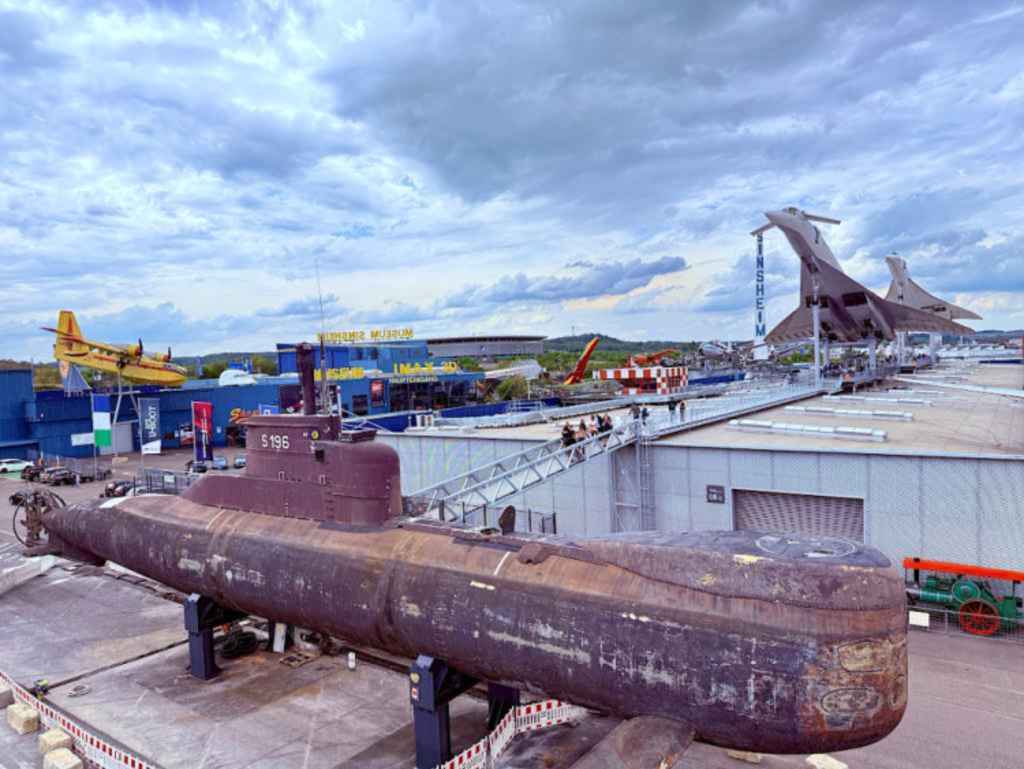
The latest exciting addition is the U17, a class 206A submarine that operated in the North Sea and Baltic Sea. The Type 206 boats served in the German Navy for almost 40 years, longer than any other submarine before it. Following its highly anticipated arrival last year, the submarine has already become one of the highlight attractions at the Sinsheim museum as provides visitors with the opportunity to dive into a multisensory journey that explores life onboard the vessel.

As the first German submarine to venture into American waters after World War II, the U17 is a famous addition to the Sinsheim collection. With a history of providing multimedia audio projects, sound design, and immersive audio installations for museums and exhibitions, a team from Laboratonium Audioproduktionen including managing director Marc Simon, audio engineer and project manager Jan Lipp, and sound designer Ksenia Cherkashina, was brought on board to transform the U17 into an immersive experience through a custom-designed acoustic concept, and installation.
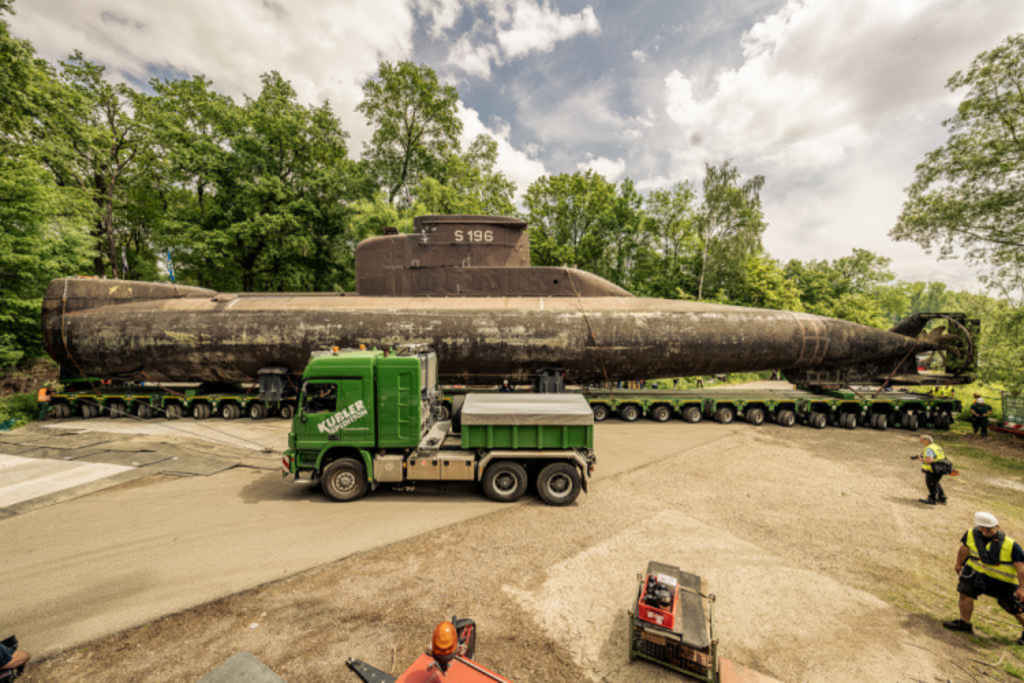
The excitement for the exhibit began before the U17 was even on site says Lipp: “The elaborate transport of the submarine across Germany generated significant public attention even before opening at the museum and underscored the significance of the new exhibition.”
Having submitted its initial concept for the U17, Laboratonium was then invited in person to outline their proposals to the client. “They invited us in because they couldn’t really understand what we meant when we said we would turn the whole submarine into a soundscape. We did some pre-production and prepared a small scene with 12 channels. We took some of our monitors into the submarine, created a quick setup to show them what was possible, and they were blown away. It was clear then that it was going to be an audio installation,” explains Lipp.

Getting a 350-tonne submarine, which is the length of 12 cars, 700km from Kiel in northern Germany to Sinsheim was a tricky process. Delivered over four weeks, via a combination of rivers and roads, at an estimated cost of €2 million (collected via donations), the U17 had to be put on its side in places during the journey to get through certain German roads. It now proudly sits in front of the Technik Museum, fixed on two huge stands.
In those first few meetings with Laboratonium, what did the client want to achieve with this exhibit? “The goal was to transform the U17 into an emotionally engaging experiential space, with clear dramaturgical structure, atmospheric depth, and a high degree of authenticity,” says Simon. They wanted the visitor to dive in adds Lipp: “With a submarine, there are no windows and it is quite a narrow space, so it feels intimidating. The goal was for the audio to give visitors those feelings and make them feel as if they were actually underwater in a real submarine, in a real situation.”
The restoration of the U17’s interior took six months, which is not surprising given that it is more than 50 years old. One part of the renovation included the submarine being tipped upside down because the bottom was full of engine oil which had leaked everywhere. Once cleaned, the renovation process concentrated on installing modern safety features including a rescue intercom, as well as new electrics, power connectivity, and data cabling. During this time Laboratonium was creating the sound design for the exhibit.

Unfortunately, the U17’s unusual shape meant a lot of the pre-work had to be re-worked, as Lipp explains. “We took measurements in the first few days with noise generators to check out potential positions of our monitors and to see with a measurement microphone if we had any major dips of the levels or in certain frequencies in different places, as we wanted it to be as stable as possible. But when we started mixing all the placements in our plan we found we were completely off due to reflections and the tubular shape of the submarine, so we had to mix everything inside the structure.”
The submarine can accommodate a total of 30 visitors at a time. As they enter the U17 down the original ladder, they are instantly met with the sound of engines humming, controls being used, and sonar pings. The visitors start at the front of the submarine right next to the torpedo tubes and walk their way down to the engine room. With loudspeakers hidden discreetly in plain sight, the detailed soundscape adds an eerie atmosphere, while in some spaces, interactive sequences are triggered to heighten the experience. Walk past one spot and you can hear marines having a conversation.
In the engine room, a motion sensor detects when somebody is about to walk in and triggers the sound of the diesel engine. “When you move around in the submarine you hear the right sounds in the right area, such as radio comms. Through targeted audio elements and other different sound configurations, we could create a precise spatial listening experience that ensures each sound is heard at the right place and the right time,” explains Lipp.
A highlight of the exhibit is the alarm sequence, during which the submarine transitions from alert status through to stealth mode and combat. “This is supported by immersive sound design, specifically produced voice recordings, and newly developed Foley elements,” explains Cherkashina. “As a source of inspiration, we received original audio tracks from the series Das Boot, which we reinterpreted and reproduced for the specific acoustic conditions in the U17.
When paired with lighting changes and the submarine’s original red emergency light, it creates a particularly intense, emotional moment.” The scene lasts five thrilling minutes and sees the submarine dive to evade enemy missiles. Laboratonium installed ButtKickers under the floor of the U17 to provide plenty of rumbles and shakes so the visitors could feel the tension within the walls of the sub. It certainly had the right effect says Lipp: “When it first opened,
we had people holding on to things when the ‘attack’ begins because it feels so real.”
The AV system required precise coordination and reliable control to bring the various audio and lighting elements together into a single immersive environment. The main audio is provided by thirteen Genelec loudspeakers, all supplied by distributor Musikhaus Schlaile, consisting of eleven 8010AP loudspeakers, and two 8030CP loudspeakers in dark grey to blend in with the interior.
Laboratonium choose Genelec for two reasons says Lipp: it uses the brand’s speakers in its own studios and loves them, but also because “they have metal mesh in front of the speaker cone which helps stop visitors touching things. The 8010s are small and impressive for their size. Because we had such narrow spaces we knew we could hide them next to a big battery, or behind or under something such as the navigator’s table. There was space underneath the table, so we put the subwoofers there too,” adds Lipp.

Three Adam Audio subwoofers and three Infrasonic subwoofers were also installed to extend low-frequency impact for an atmospheric listening experience. A Mac Mini running QLab 5 software handles media playback and control, while a system of OSC triggers and sensors was developed to respond to visitor movement and time-controlled sequences, allowing soundscapes to shift between calm background ambience and more exciting moments.
To maximise immersion, the AV kit had to be hidden wherever possible, helping the space feel like a real submarine. For once this is where the original structure came to Laboratonium’s aide, as Lipp explains. “Because there is so much cabling in a submarine, we followed the same cable tray paths as the original cabling. For the speakers we just mounted them with welded adapters to the walls, and that’s how they blended in.”
What were the most difficult parts of this installation for Laboratonium? Speaker placement was the main one says Lipp, but there were other issues too, all related to the confined space of a submarine. “You have such narrow spaces [to place speakers] and you also have metal surfaces for the acoustics, which is a bad thing. You also have visitors all over the place who could touch and destroy things by accident. As a result, you have to make everything safe and make the cabling as discreet as possible, we didn’t want our technical stuff to be seen in front of the exhibits. We wanted it to look and feel like a submarine rather than a museum. That was the overall goal. It feels like the sounds are coming from everywhere because you don’t see the speakers.”
Submarines are notoriously cramped spaces, did this cause issues during the installation? “It was a very big challenge because sometimes we had to work in extremely narrow spaces to install the cabling. We had to crawl behind the engines to get some cables through and reach the very tip of the submarine, such as the tail, where one speaker is positioned. It was a lot of effort to get into those spaces. I’m quite tall so I ended up with some bruises after working there,” says Lipp.

The whole AV installation process took just eight weeks as Laboratonium had to meet the hard deadline of a gala opening for the entire exhibit, which included a guest list of retired submarine commanders and marines. Sound design for a walk-through submarine is not an everyday scenario adds Simon: “It required a high degree of creative flexibility and technical expertise, but this uniqueness was ultimately part of the project’s appeal.” The overarching goal of the U17 exhibit was to create a spectacular attraction for all the senses adds Lipp. “We wanted the visitors’ experience to go beyond mere knowledge transfer, showing how museums can not only inform, but also leave a lasting impression.”
TECH-SPEC
Audio
Adam Audio TS10 subwoofers
Arturia AudioFuse 16Rig audio interface
ButtKickers haptic transducers
Genelec 8010AP and 8030CP loudspeakers
Control
Apple Mac Mini M4
Raspberry Pi
QLab 5 software