Radiohead’s return to touring saw a show that performed 20 dates across five cities in Europe. To help
deliver this vision, the band selected Universal Pixels as video partner building on eight years of collaboration that began with Radiohead’s last tour and continued through The Smile and Thom Yorke’s solo projects.
The team, lead by new Radiohead creative lead Sean Evans, they developed a vision for an in-the-round design with no visual obstruction between artist and audience.
This approach removed all traditional camera platforms, which in turn increased the number of remotely operated UHD cameras required to maintain complete coverage without compromising sightlines. Instead of long lenses on raised platforms and islands of operators across the arena floor, the creative team conjured a clean 360-degree environment in which the band remained visible and connected to the crowd at all times.
The design centred on a 12-sided cylindrical screen system constructed using ROE Visual Vanish V8T and ROE Strip products, selected by Universal Pixels for their transparency, weight, rigging speed and proven touring reliability. The screens moved independently throughout the show, rising from stage level and rotating into new configurations for each song. The LED system ran on Brompton Tessera SX40 processing with fibre-based Tessera XD distribution, giving the screen team the responsiveness and colour accuracy required for a show where every pixel was generated live.

One of the defining challenges was the decision to operate all cameras remotely. To maintain an unobstructed 360-degree viewing experience, all UHD cameras were positioned within the footprint of the stage. This included two Panasonic AW-UE150 units running on two 16-metre curved tracks, six additional PTZ cameras distributed across the stage and 20 Blackmagic G2 cameras deployed across static, gimbal and pedestal systems. These feeds served multiple roles: driving live Notch content on the moving screens, supporting backstage monitoring for technical departments and providing real-time reference for the creative team.
Supporting this was a network architecture built around 12 Netgear AV Line M4250 switches, running multiple VLANs for camera control, Notch processing, tracking data and LED distribution. Designed with full redundancy, the system ensured each component could operate independently without risking cascading failure.
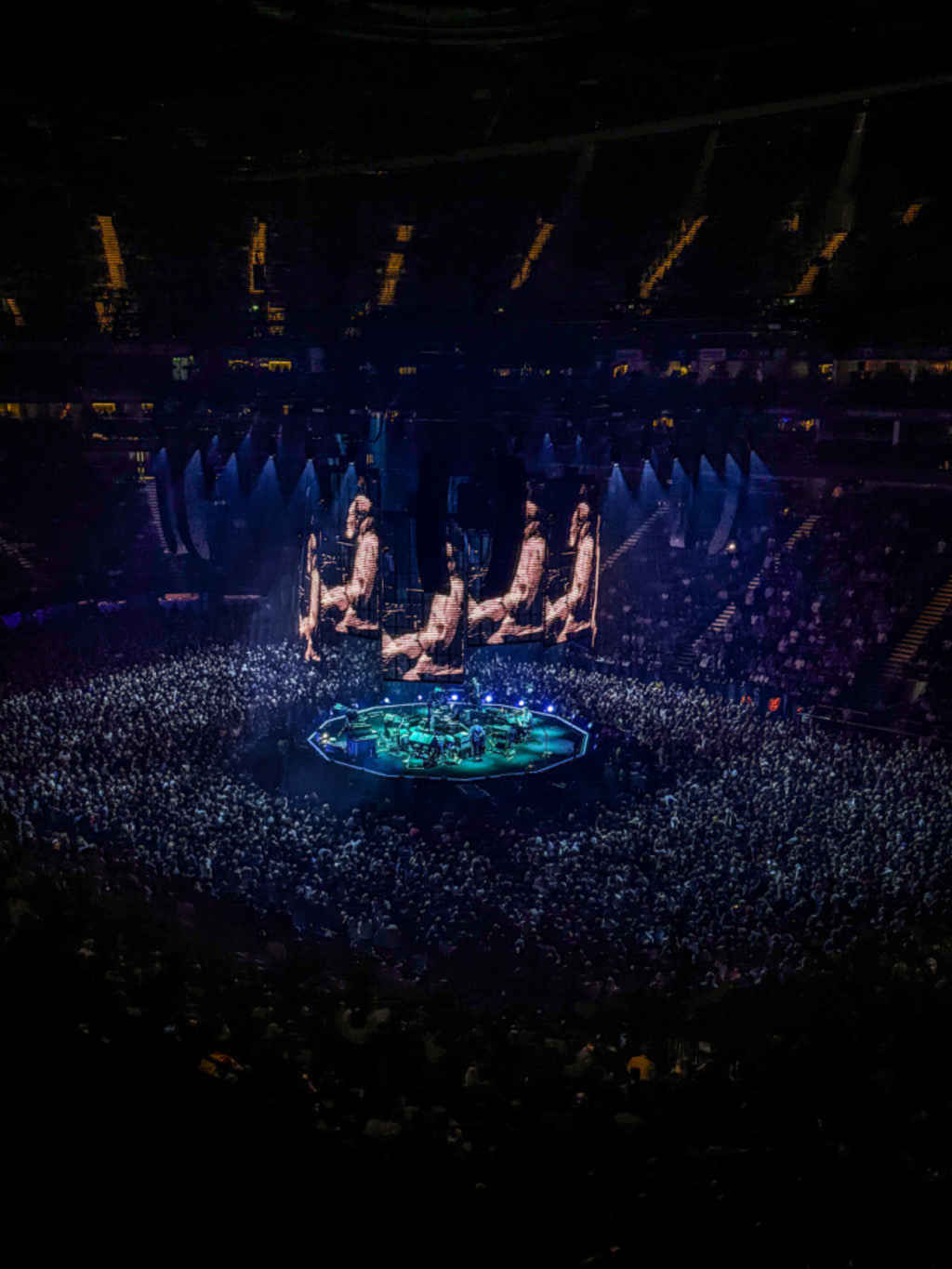
The show’s commitment to real-time content was equally ambitious. No material was prerendered and no timecode was used. Every cue was triggered manually using Sockpuppet, allowing visuals to flow with the band’s performance. With more than 70 songs programmed before rehearsals and setlists often finalised minutes before showtime, the system needed to transition seamlessly between looks without relying on sequence-based structures.
Disguise GX 3 servers provided the power and flexibility to support the heavy Notch loadand complex dynamic mapping required.