A complete renovation of the outdoor sound system at a religious pilgrimage site in Portugal had to deliver sound for hundreds of thousands of people at once. Paul Milligan speaks to the consultant involved.
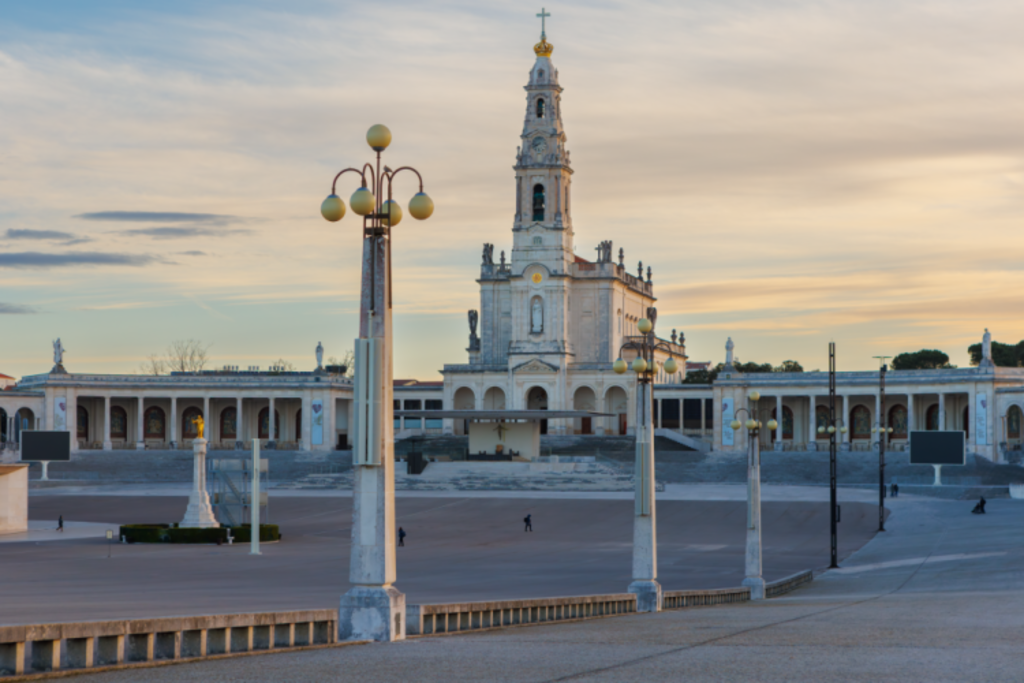
Located 90 minutes north of Lisbon, the Shrine of Fátima in central Portugal is a site of religious pilgrimage, built where the Virgin Mary is said to have appeared to three shepherd children in 1917. The expansive 37-acre site is home to The Chapel of the Apparitions (built in 1919), the Basilica of Our Lady of the Rosary (home to the shepherd children’s tombs), the Basilica of the Most Holy Trinity (a huge Catholic church), the Chapel of the Apparitions, usually called the Capelinha, as well as additional facilities such as auditoriums and a congress centre.
All these buildings are connected by a large central outdoor prayer area, with an outdoor space measuring approximately 350m x 180m, resulting in a total area of around 63,000 sq m. According to official records, the site has an official capacity of approximately 300,000 pilgrims.
The prayer area had previously installed a major sound system to cope with huge events in 2017, but the system, although powerful, was not functional anymore. Ricardo Castro, general manager at AV consultant RCOE, takes up the story: “The system was not performing well, and they had even changed some of the speakers, but there were lots of complaints because people could not hear, and the coverage was not correct.” A decision was made to make a change and at the beginning of 2024 Castro and RCOE were hired to collaborate with the Shrine of Fátima’s internal AV team and technicians. Castro was responsible for the conceptual design of the entire renovation, writing the technical specifications, then during the execution acting as supervisor of the entire works.

The project involved the complete renovation of the outdoor sound system, with the physical installation carried out by the Shrine’s internal AV team and technicians. “Some specialised services, such as networking infrastructure, civil works and metal works, were outsourced, but the majority of the implementation was handled internally,” adds Castro.
The project was entirely funded by the Shrine themselves, with an estimated renovation cost for this phase of the project put at €1 million. From a technical perspective, the main goals of the renovation project were to improve sound quality and speech intelligibility for celebrations, spoken word and choirs. Additionally, the system needed to function as a fully redundant emergency and paging system. Reliability, redundancy and safety were key objectives from the outset says Castro.
The design process started in July 2024, so Castro had two months to design the new system. There were certain things that were clear from the start he says: “One of the requirements was the use of Dante. We were also looking for steerable speakers because they want to control the sound in the prayer area and avoiding spilling in the outer areas.” Castro finished his design in September 2024, it was then approved and the project moved onto the next phase. Part of Castro’s designs included a tender, not for the integrators, but for local suppliers in Portugal. Four pro-audio companies were approached to submit proposals for the main outdoor audio system, with Renkus-Heinz, via local distributor SeeSound, winning the day for the supply of beam-steerable speakers. With the decision made, it was time for the procurement process to begin.
The timeline for this was “really tight” explains Castro, as the outdoor season opens at Easter and the project has moved on another two months since the designs had been finalised. “The commitment was to have the opening at Easter 2025 as a soft start. With the main celebration of the Shrine later on 12-13 May.” The two biggest requirements once the installation began were to improve intelligibility, and to build redundancy into the system. Fátima’s internal AV team began the process in early January, pulling cables and creating new rack rooms. To get all this done by April was “quite a task”, he admits. This process was complicated by the fact that, even though the installation took place outside the typical outdoor season, the Capelinha (the small chapel) is open 24/7 and hosts celebrations even during the winter period, with services taking place eight to ten times a day. “This area was operating all time, which created some restrictions and some limitations,” says Castro.
The installation also raised other challenges because of the site’s religious and historical importance. “Because this is a very sensitive place, they have an internal committee and architects to oversee everything we do. We cannot do whatever we want,” explains Castro.
To house speakers across the large prayer area, the majority had previously been installed on light poles on either side, but this has caused a problem. “There was a big gap of 100 metres between the poles. We were not able to put in big line arrays, as it was not allowed, and there was a critical area where the coverage was not okay.” Finally, a decision was made to introduce a central pillar in the prayer area. “Architectural, of course, the architects had concerns about the proposal, the Shrine committee were reluctant too, as was the civil works team.” There were added concerns too because beneath the ground of the prayer area is a series of old caves. Eventually a compromise was found, and the central pillar was given the go ahead.
To lessen the impact of installing a central pillar, Castro had to be very aware of the visual impact of what the team was installing. “For all of the speakers in all the different locations, we had to carefully define the colours in accordance with the architect.”
EASE Modelling played a big part in getting the right locations and placement for the central pillar says Castro. “When we started this process, we found that there was a big shadow in the centre of the prayer area. I created a simulation of the entire place so I could simulate all the problems they were having with the system. The Sanctuary board was aware that there was a big shadow in the centre, they could see it themselves during celebrations. Having the simulation meant I could show them with heat maps where the shadows were. The simulation was useful to convince the internal committee and civil works teams what I was doing was correct. In the beginning the idea was to put two or three poles in the centre because the security team were asking for poles to fit lights and cameras on. We eventually negotiated a compromise with architects because we could show them these models and say:’ if we insert this point in the middle, it will not be 100% coverage, but you will see a big increase in coverage and the intelligibility’. We can now say that 80-85% is fully covered and everybody is completely fine with that.”
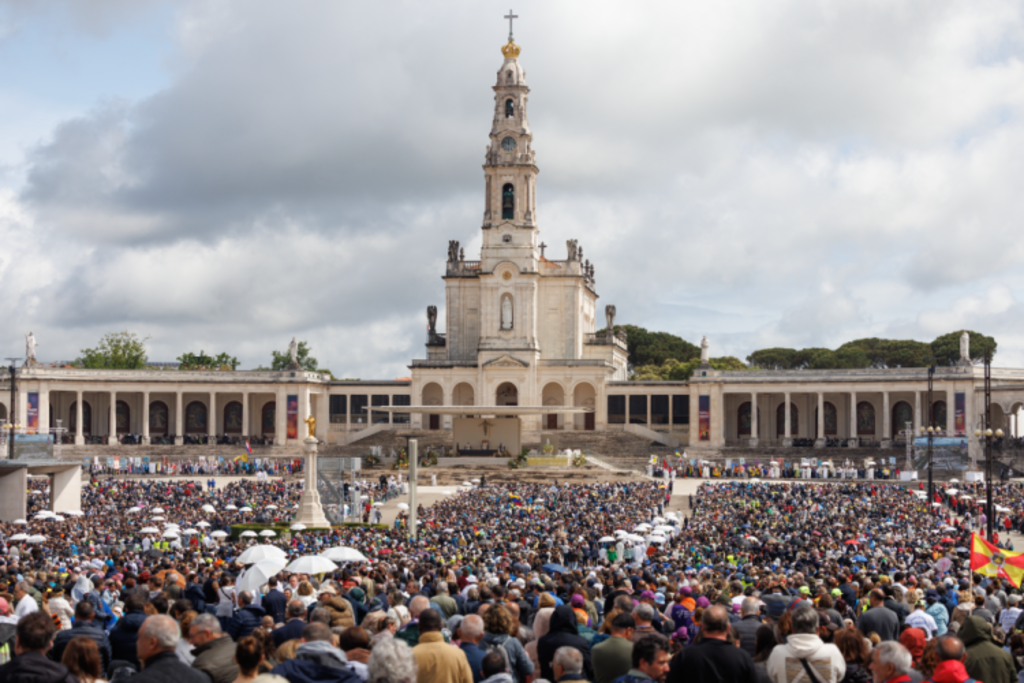
Before this project, the audio for the entire prayer area was concentrated on one rack room. This renovation added a second, so the audio is now between two centres with different cable paths. “It’s now fully redundant on IT and power, and we have full autonomy for operating for all the celebrations,” adds Castro.
When large events do take place in the prayer area, where are they controlled from, is there a front of house position for example? There are three places where an operator can be based says Castro. “They have a main control room below the main altar. It’s a blind room, so they are not listening to what’s going on, but they have everything inside they need to control the sound. There’s another blind room which features the brain of the system, which is placed
on the other basilica, on the opposite side of the altar.” One important aspect for Castro in this project was to create an outdoor place to monitor the main celebrations. He explains: “We have a control room outdoor looking at the altar to get a feeling for what’s going on.” Future plans include the addition of another two rack rooms to spread the equipment across the site.
The choices of technology, specifically the Renkus-Heinz beam-steering line arrays and BSS DSPs were driven in part by the expectation from the Sanctuary board that this new system will be in place for at least the next 10 years without issues. “They were also looking for it to be expandable with the new rack rooms we created, because we can split the DSPs over two rack rooms to create redundancy,” adds Castro.
For loudspeakers, steerable technology was a must he explains, and Renkus-Heinz was selected. DSP processing and the core network infrastructure is based on BSS products. Additional breakout boxes and converters were supplied by Tascam. Existing passive loudspeakers were retained where appropriate, and amplification for passive systems was provided by LEA Professional amplifiers.
The system runs on Dante, and this decision was partly made because of the site’s recent history, as Castro explains: “When they built the new Basilica in the early 2010s, we designed the network and IT infrastructure to run on CobraNet, because Fátima hosted national and international broadcasters. We created a large network to connect everything over IP. In 2017 or 18 they decided to upgrade to Dante, everything is now running on Dante, everyone is comfortable with this technology because it works.”
The first summer of operation went well following the renovation, and plans are now underway for more additions to be made in time for the Easter celebrations this year. The collaboration between RCOE and the Sanctuary is part of a long-term plan of action says Castro. Most importantly, the feedback from all the different parties has been very positive. “The improvement after the renovation is remarkable. The feedback from pilgrims and celebrants is very good, everyone has noticed the difference, and everyone is very satisfied with the results achieved, the sound quality, coverage consistency, and intelligibility is significantly better. The new system is also very appreciated by the operations team, the system has now more flexibility, safety, and redundancy, everything has been significantly enhanced,” concludes Castro.
KIT LIST
BSS Soundweb London BLU 806DA DSPs
LEA Professional CS354D amplifiers, CS1504D amplifiers
Renkus-Heinz ICL-F-RD-WR and ICL-F-DUAL-RD-WR steerable columns
Ruijie RG-NIS3100-8GT4-SFP-HP network PoE switches
Tascam AE-4D fibre switches, MM 2DX audio converters
t.bone indoor and outdoor microphones