Thrillseekers are demanding more from the theme park experience. Reece Webb explores how visual tech is changing how rides are delivered.
2025 was a big year for adrenaline junkies, particularly in the UK, with the announcement of movie giant Universal Studios’ first European theme park and historic operator Puy du Fou confirming plans to open a UK park in 2029. Add to that a wave of major investment in theme parks and visitor attractions across the UAE, and there’s plenty to be excited about.
Not only will this drive an explosion of jobs and new opportunities across hospitality and tourism in EMEA, but it also opens the door for integrators and consultants to push AV technologies to a new level. It may sound like we’re beating a dead horse, but if there’s one thing that’s defined the taste of audiences from retail to theme parks it’s that experience is all the rage, and with good reason. Audience expectations around the quality of their experiences have evolved, and throwing a few loudspeakers into a pre-ride experience simply doesn’t cut the mustard anymore.
Kevin Murphy, senior VP, Kraftwerk Living Technologies, explains: “Theme Parks are big business, and the global market has grown quite steadily over the years. Since Covid, the market has a current value of 47.9 billion Euros and projected to grow above 106 billion Euros by 2032. Demand in the market is growing, and increased leisure time and money in the pocket is driving a lot of change, followed by technology advances and the right use of technology to drive immersive storytelling and immersive experiences.
“Whilst ‘metal rides’ such as roller coasters, drop towers, and other thrill rides are always at the top of the shopping list for any existing park owner or developer, there is a very strong growth in technology-driven, media-based attractions, as well as the addition of media to new and existing metal rides.”
Today’s theme park is no longer just a hub for thrill seekers and adrenaline junkies to get their fix. The theme park has become a space for families to maximise their time and enjoyment of a park through a broader mix of experiences for all ages.
Ed Cookson, projects director, Sarner International, says: “Demands are driven by audiences. Theme parks do try new things, but they are constantly thinking about where their audiences are coming from and what motivates them to visit. There has always been a demand for the traditional thrill rides, and the roller coaster isn’t going anywhere. We’re seeing that people want a more varied day out for the family, not just for people that want to chase thrill rides. As a result, we’re seeing a lot of parks include highly story-driven attractions, and the introduction of educational attractions. It’s about offering varied opportunity.
“At the Qetaifan Island North park in Qatar, for example, they are building a water park, but they also wanted to include a ‘edu-tainment’ ride that would educate people about the region and its history. Even places like Chessington and Alton Towers in the UK, both parks with heritage and history, can think creatively about how to tell their own stories. This varied offering is driving demand for theme parks and we’re going to see more of it. As people have more choice, we’re seeing theme parks rightly holding us to account. We’re now seeing those major theme parks focussing on reliability as every minute of downtime is painful for them, for us, and for visitors.”
Believe your eyes
It’s no secret that audio technology has played an instrumental role in fostering the pre-ride experience for decades, working alongside themed environments to build atmosphere and anticipation long before boarding begins. Increasingly, LED and projection are playing a central role in not just the pre-ride experience, but in the delivery of the attraction itself.
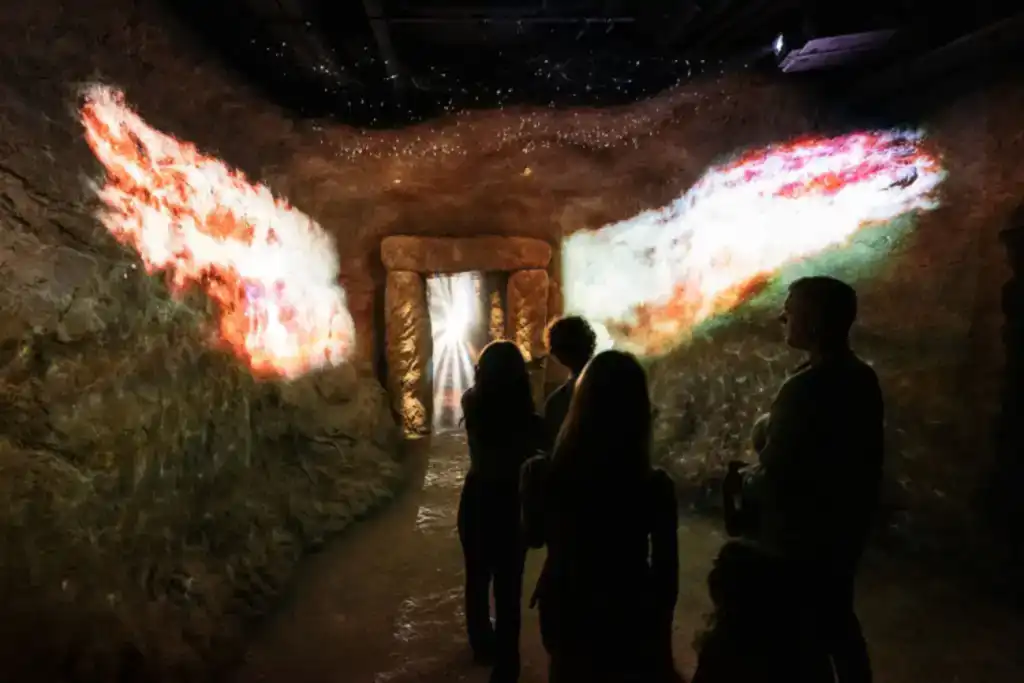
Odyssey, an immersive dark walk experience in St. Julian's, Malta, delivered by Sarner.
Today’s attractions are adapting to the changing interests of late-millennial and Gen Z customers, with social media– centric ‘shareability’ increasingly built into theme park design. This is leading to rides and theming that increasingly go beyond the traditional post-ride photograph, creating a spectacle that visitors can share with their friends over social media. This puts visual technology at the centre of the ride experience; however, technology itself does have its limits. While there are clear watershed moments, such as before and after the adoption of LED at many attractions, the focus should remain on delivering the right technology for the right reasons, enhancing the experience rather than defining it.
Ross Magri, managing director, Sarner International, explains: “If an attraction is story-led, it behaves a little like a classic film. Even if the visual effects are not cutting-edge, it doesn’t age in the same way that technology does. When technology is placed at the forefront, it dates quickly. Take VR as an example: the headset someone has at home can easily outperform what’s at the venue, and that’s when the technology becomes the issue.
By contrast, when the experience is driven by narrative, theme, and atmosphere, the technology becomes a supporting tool rather than the focus.
Whether a projector is 4K, 6K, or 8K is ultimately secondary to the story. Attractions where the technology is deliberately kept behind the scenes tend to have far greater longevity than those built with technology at the forefront.
At Sarner, we are always creatively led. We use projection,lighting, animatronics, and special effects to make an idea work, but the creative vision comes first. Technology follows design, not the other way around. LED is improving rapidly, and when combined with projection it offers new creative possibilities. Over time, we may see a greater shift towards LED due to its contrast, brightness, and flexibility, although challenges around heat, weight, and cost remain.
“The reality is that projection and LED are converging rather than competing. Projection will continue to play a vital role where imagery is applied to irregular surfaces, such as scenic and themed environments, while LED excels in applications where images sit on flat or curved surfaces. Used together, these technologies allow us to create richer, more immersive, and more theatrical experiences.”
Murphy concurs: “Theme park designers are blending landscapes with LED and projection to generate spaces where the physical and digital are hard to distinguish, creating attractions that are designed to get the best out of the visual technology, with audio following in second place. Increasingly, there are places where you start to wonder if what you see is physically real or a careful use of LED displays built into the scenery in such a way that the changes are subtle but vibrant. Even with nicely produced projection mapping, a great show will let you believe that what you see is a building transformed.
“Both large scale LED and projection will have relevant uses for many years to come, sitting side by side with major advances in brightness, contrast, and colour between them and the choice just comes down to the ambient environment, cost, and complexity of what you are trying to do, projection is nowhere near dead.”
Knowledge is power
Clients in the visitor attractions and theme park sector are rarely typical. They often bring a clear vision, a detailed brief, and in-house expertise that understands the technologies required to deliver it. While this presents clear advantages for consultants, integrators, and manufacturers, the priority must always be the intended impact of the experience, rather than the technology itself. In the case of LED or projection, it’s not a case of one technology trumping the other wholesale, but focussing on the effect that the designer is attempting to achieve.
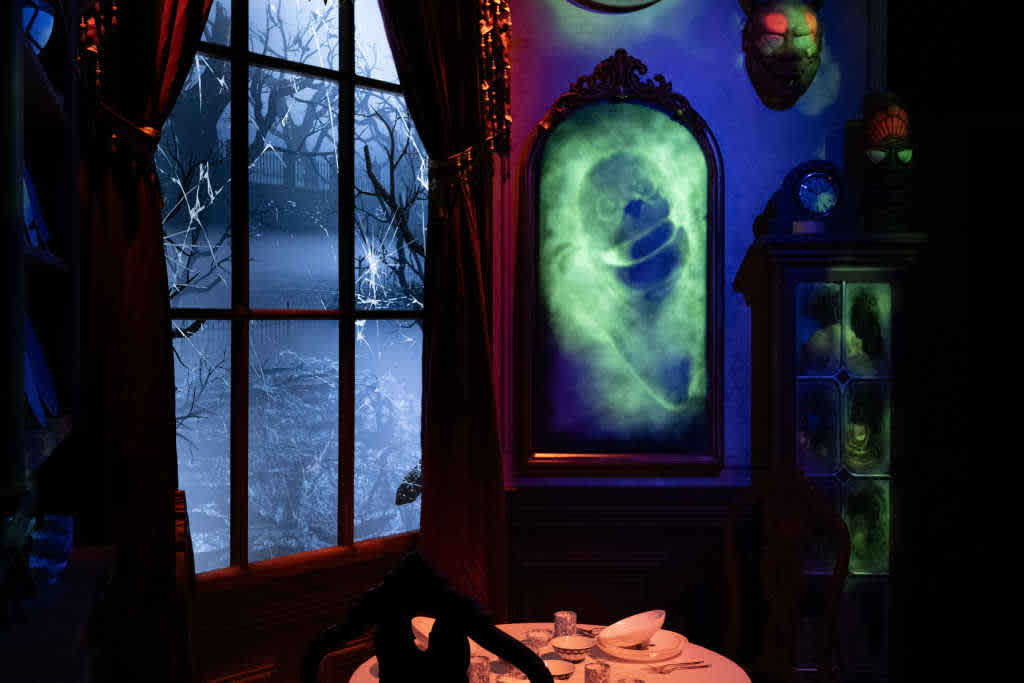
Christie projectors in use at the Ghostly Manor in Paultons Park.
Joe Graziano, director of sales, entertainment, EMEA, Christie explains how providing options and honest advice can make all the difference in the ride experience: “If you use the right technology for the right environment, you’ll get the right results. I often get asked why I should use a specific projector instead of another, and the argument is always the same: you must use the right technology for the purpose it was designed to serve. We wouldn’t necessarily place LED where we thought projectors are a better bet. That’s not to say that the customers, designers, or consultants have sometimes specified LED because it’s the latest, greatest technology. But if we think it’s incorrectly specified, it’s our duty to advise that we believe it’s better with projection and why.
“We saw a tender for an EMEA dark ride project where LED was specified. We spoke to the integrator and explained that they will need an LED system that can turn down to below 300 nits. Without this capability, colour and greyscale would shift, creating significant challenges and potentially extensive content rework for the customer, if it were even possible at all. The better bet for this dark ride, where audiences are in a moving vehicle which stops at the screens for a few minutes at a time to play a game at close range, is strong quality projection. The integrator agreed and we have specified both an LED tender quote and a projector tender quote, with projection at three-chip for best-of-the-best or single chip if they want to value engineer the system.”
Power of projection
While LED and immersive audio fill an important share in the market, the power of projection can clearly be felt across the theme park industry, and it’s no question as to why: versatility, flexibility,and reliability.
Graziano says: “Projection today helps us to put that message across, supporting immersive stories by delivering levels of resolution and colour that, historically, projectors have not been able to achieve, whether due to limitations in brightness, resolution, weight and size, noise, or placement. Projection nowadays allows for greater realism and immersion, supported by major improvements in content adoption and creation that have come from years of listening to the market and pushing boundaries to improve image quality.
“The reliability of projection has also become very strong. Rides typically don’t close because projectors aren’t working, providing that they are maintained and looked after. Theme parks are harsh environments, but if corners aren’t cut in the deployment of projectors, then there is no reason that they shouldn’t be able to provide hours of great visuals. Energy usage is also a big factor, and that sits at the top of the discussion tree now.
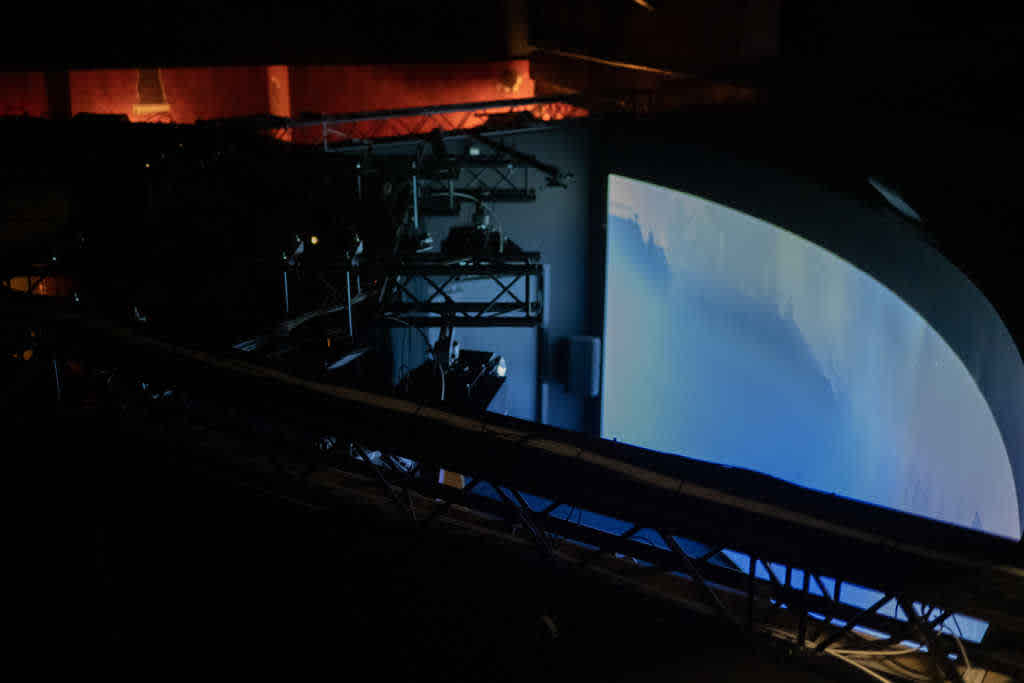
“With the cost of energy also becoming a topic of discussion, particularly in Middle Eastern projects, the vision and the dream can get ahead of what the financial and energy repercussions can be. Down the line, this can manifest as a rude awakening that translates into cutbacks and retendering with a new product set. Manufacturers like Christie and others are finding new ways to make our technologies energy efficient, and Christie projectors and LED solutions are very energy efficient given the performance levels they are throwing out. We have been working hard on this as an organisation.”
While hardware continues to play a central role in the delivery of theme park attractions, the impact of software led applications, and the impact of content cannot be understated. With a growing demand for pop up attractions with their own unique content, the ability to accurately map 3D content and adapt that content on the fly can not only help to immerse visitors into an attraction, but to extend the lifestyle of a ride through regular updates and changes to the content.
Benjamin Fritsch, CEO, Vioso, explains: “Visitor attractions are constantly changing. Today, we’re seeing an evolution towards living worlds within these attractions where AV can deploy multiple narratives and storylines through technology. The biggest transformation in this market is that there can be more changes. If you are building a ride today, you don’t just want one ride, you want lots of content so that you can renew the ride every five to six years. This is creating a more modular line of thinking, where you use projection mapping, LED, and the content side will be key in the future.
“We are moving very quickly from static content to interactive worlds driven by engines such as Unreal. This is a big plus because a ride can change, with its theme changing dramatically in as little as two years. If you combine this with more AV technologies like dynamic projection mapping, you can easily change the 3D content in a scene and adapt it into a completely new ride with a couple of small changes.”
Future thrills
The future of theme parks is looking bright. With unprecedented investment, new parks, and new attractions springing up all over EMEA, the time for parks to innovate is now and AV technology will be at the centre of this new wave of thrill seeking.
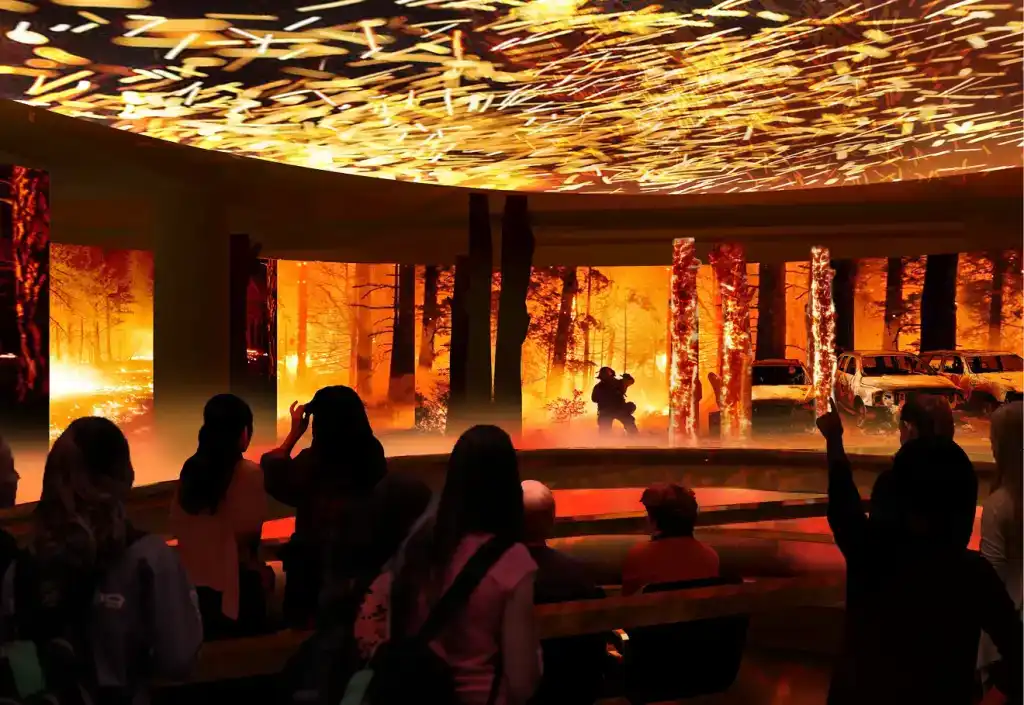
Moonraker VFX and Sarner International's Immersive Wetterextreme Experience, Klimahaus Bremerhaven in Germany.
“With big theme parks, you’re often looking at five to fifteen years of lead time,” says Cookson. “We still don’t know how technologies like AI will impact the industry, but we do know people will continue to crave stories, experiences, and variety that audiences can’t get at home. We always ask: ‘Why am I here? What’s bringing me out?’ It’s about creating those experiences that are impossible to replicate at home, and this will still be the case as we go forward over the next five to fifteen years.”
Murphy says: “What is certain is that the future of AV technology in theme parks and other attractions is very bright, and the only path that we can see is growth. But with it, the need for technology to be applied with care and specialised experience remains paramount, as working in a creative world demands skills, understanding and patience that many other larger AV sectors do not need. The specialist integrator plays an often neglected role in the process.
“The use of effective and appropriate technology is a skill, and many of us sometimes argue against using technology and even walk away if we cannot be proud of what our guests see, hear, and experience. Just because you can does not mean you should. If a client cannot afford to do it properly and cannot allow for maintenance, operating costs, and spares, then think again and use different techniques. A skilled team will use the right technology, as our reputation and the reputation of our clients depend on it…and guests notice the difference.”
Fritsch closes: “The big topic of the future will be how we can create living rides. In the future, we will think more about software updates for rides rather than physical hardware for rides. AI helps on the content creation side, of course, and I could see rides of the future offering unique content for each rider within the same space, based on your preferences and age. We will all get our own individual content, and this means there is a bright future for the attraction market as it will save tons of money and offer more unique ride experiences that compete with phones and video games. Theme parks really must think more about the digital age and the ability of transforming narratives.”